
 blog
blog
Best Hybrid Car Diagnostic Service: 2026 Guide
Table of Contents
- What Makes a Hybrid Car Diagnostic Service the Best
- Diagnostic Equipment Standards That Separate Top Shops
- Signs of Hybrid Battery Failure You Should Never Ignore
- How Hybrid Battery Diagnostic Cost Works and What Affects It
- Why ASE-Certified Hybrid Repair Matters for High-Voltage Safety
- DIY vs. Professional Diagnostic Thresholds: When to Stop and Call a Shop
- Questions to Ask Before Choosing a Hybrid Car Diagnostic Service
- Frequently Asked Questions
Last Updated: September 23, 2026
What Makes a Hybrid Car Diagnostic Service the Best
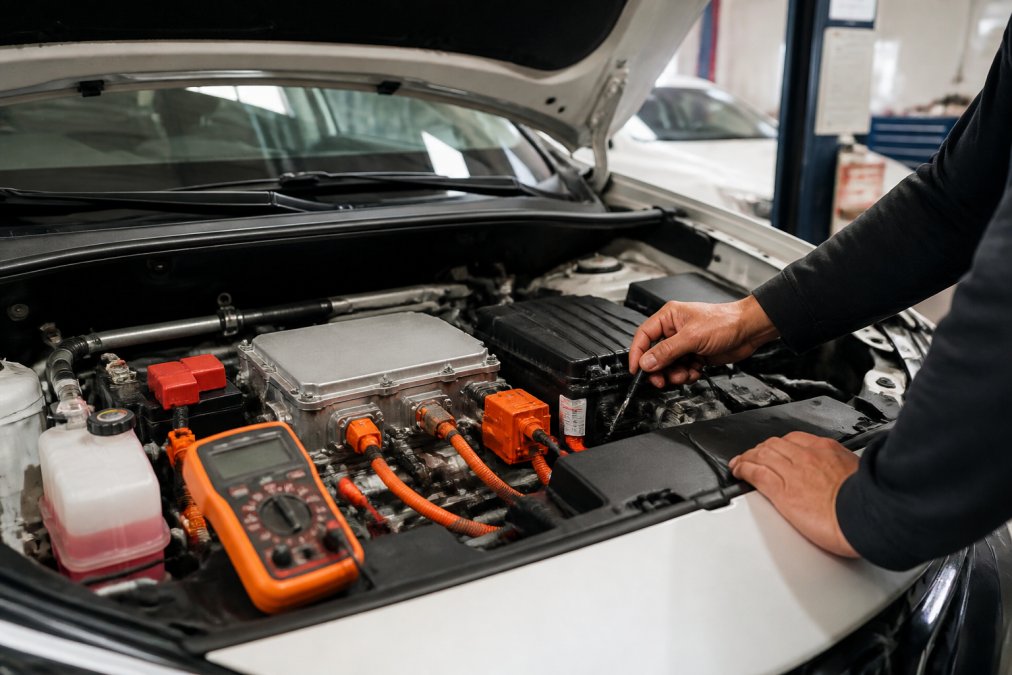
The best hybrid car diagnostic service combines factory-level scan tools, technicians trained specifically on high-voltage systems, and a repair process that starts with measurement instead of guesswork. At Kerner's Auto, we've watched too many drivers pay for parts they never needed because a shop scanned a generic code and guessed at the rest.
Diagnostic Equipment Standards That Separate Top Shops
Ask one question before you hand over your keys: does your shop use OEM diagnostic software or a generic aftermarket scanner? The answer tells you almost everything.
Look for these equipment standards:
- OEM or factory-authorized diagnostic software for your make
- High-voltage isolation testing capability
- Battery capacity test equipment with a printed battery health report
- Live data streaming for the powertrain control module
- Thermal imaging for cooling system inspection and hot-spot detection
Signs of Hybrid Battery Failure You Should Never Ignore
Catching the signs of hybrid battery failure early usually means a cheaper repair. Ignoring them usually means a tow.
Watch for these symptoms:
- A noticeable drop in fuel economy that doesn't match your driving habits
- The engine running more often than it used to, even at low speeds
- Warning lights for the hybrid system or check engine
- Reduced acceleration or a "limp" feeling under load
- The battery gauge dropping faster than normal, or charging in odd patterns
- A humming or whining noise from the rear or under the hood
How Hybrid Battery Diagnostic Cost Works and What Affects It
| Diagnostic Level | What It Checks | Typical Shop Time | Typical Price Range | Best When |
|---|---|---|---|---|
| Basic code scan | Stored and pending trouble codes, freeze-frame data, warning lights | 0.5-1 hour | $75-$150 | A single warning light just came on |
| Battery health test | Module voltages, state of charge, capacity, internal resistance | 1-2 hours | $150-$300 | Fuel economy dropped or the battery gauge behaves oddly |
| Full high-voltage system evaluation | Inverter, converter, voltage leakage, isolation faults, cooling loop, live PCM data | 2-4 hours | $250-$500 | Multiple symptoms, limp mode, or a no-start hybrid |
What actually drives the number up or down:
- Diagnostic depth. A code scan reads what the PCM already stored. A battery capacity test requires discharging and recharging modules under load, which is real bench time.
- Vehicle architecture. A Prius with an accessible battery pack under the rear seat is faster to test than a hybrid with the pack integrated into the floorpan or requiring partial interior disassembly.
- Battery chemistry and age. Nickel-metal hydride packs (common in older hybrids) and lithium-ion packs (common in newer ones) test differently and require different equipment and time.
- Follow-up repair. Most reputable shops apply the diagnostic fee toward the repair if you authorize the work. Ask this before you book, not after.
- Mobile vs. shop. Mobile diagnostics save you a tow but usually cost more per hour and may not include a full capacity test, since load-testing equipment is not always portable.
One more cost most guides skip: a failed hybrid battery often takes the 12-volt battery with it, and vice versa. A weak 12-volt battery can throw hybrid system codes that look like a pack failure. A good diagnostic checks the 12-volt system first, because that test rules out a false positive before you spend money on high-voltage work.
Why ASE-Certified Hybrid Repair Matters for High-Voltage Safety
ASE-certified hybrid repair matters because a hybrid battery pack runs several hundred volts of direct current, and DC at that voltage does not let go. A technician who has not been trained to isolate the system safely is a hazard to themselves and to your car.
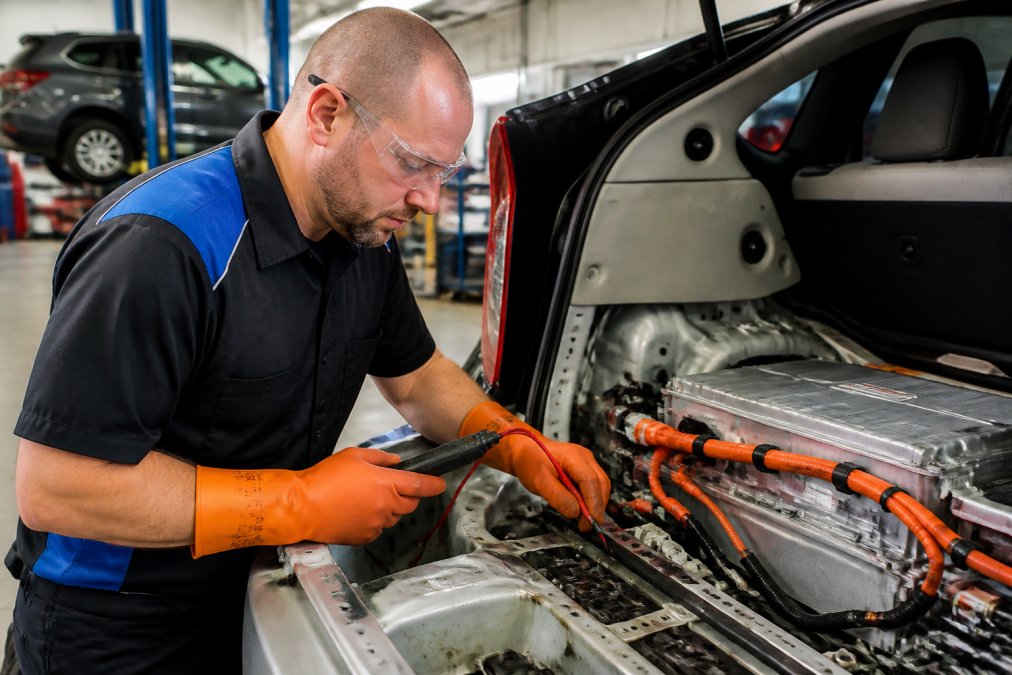
What the safety sequence actually looks like
Proper high-voltage safety protocols follow a fixed order, and skipping any step is how people get hurt:
- Identify and label. The technician locates every orange high-voltage cable and component before touching anything. Orange is the universal marker for high voltage in these systems.
- De-energize. The technician removes the service disconnect plug, which breaks the battery pack into smaller, safer segments.
- Wait. The system is given time for residual capacitors to discharge. This is not optional; capacitors hold a charge after the pack is disconnected.
- Verify zero voltage. The technician tests the circuit with a meter rated for the voltage present, confirming no live current before proceeding. This step is repeated after any work and again before reconnection.
- Use the right PPE. Class 0 insulating gloves rated for 1,000 volts, tested and air-checked before each use, plus eye protection and insulated tools.
- Re-verify before reconnect. Voltage is confirmed dead again before the service plug goes back in.
How to vet a shop's equipment and credentials
- Which certification do your hybrid technicians hold, and is it current? ASE certifications require recertification, so "we're certified" is not a complete answer.
- Do you use OEM diagnostic software or a generic aftermarket scanner? OEM software reads every module the manufacturer built into the hybrid architecture, including battery management, inverter, and converter controllers. Generic scanners often read only emissions-related codes, which means a shop with the wrong tool can miss a failing battery module entirely.
- Can you show me a sample battery health report? A real report shows individual module voltages and state of charge. If the shop can only show a code printout, their diagnostic depth is limited.
- How do you handle high-voltage isolation during diagnostics? A good answer names the service plug and the voltage verification step. A vague answer is a warning.
- Do you have high-voltage isolation testing and thermal imaging capability? Thermal imaging catches hot spots in the cooling system and failing connections that a scan tool will not flag.
For drivers who want the diagnostic done right the first time, Kerner's Auto brings ASE-certified technicians, OEM-level diagnostic equipment, and a family-owned history that goes back to 1973. We handle hybrid and EV diagnostics that other shops turn away. You can also review the U.S. Department of Energy's hybrid and electric vehicle basics to understand your vehicle's systems before you book, and the National Institute for Automotive Service Excellence sets the certification standard that separates trained hybrid technicians from generalists.
DIY vs. Professional Diagnostic Thresholds: When to Stop and Call a Shop
DIY makes sense for a lot of car care. It stops making sense the moment high voltage or a hybrid fault code enters the picture.
You can safely handle:
- Checking 12-volt battery terminals and connections
- Reading basic warning lights with a consumer OBDII scanner
- Checking coolant levels in the standard engine cooling system
- Documenting when symptoms happen
Stop and call a shop when:
- Any orange high-voltage cable or component is involved
- The hybrid system warning light is on
- You see voltage leakage or isolation faults
- A battery capacity test is needed
- The car won't start or won't move
Questions to Ask Before Choosing a Hybrid Car Diagnostic Service
A few direct questions will separate a real hybrid specialist from a shop that will hand you a bill and a guess.
Ask these before you book:
- Do your technicians hold current ASE certification for hybrid and EV systems?
- Do you use OEM diagnostic software for my vehicle's make?
- Can you provide a written battery health report after testing?
- How do you handle high-voltage safety during diagnostics?
- Will the diagnostic fee apply toward the repair if I proceed?
- Do you offer a loaner car or shuttle while my vehicle is in the bay?
Frequently Asked Questions
What is the best diagnostic tool for a hybrid car?
The best tool depends on the vehicle make. Most shops use OEM diagnostic software from the manufacturer, paired with a professional-grade OBDII scanner that can read hybrid-specific trouble codes and stream live data from the powertrain control module. Generic code readers often miss hybrid faults because they cannot access high-voltage system data or run a battery capacity test. A shop with OEM software can perform a full diagnostic scan, check battery module balancing, and generate a battery health report.
How much does a hybrid battery diagnostic cost?
Hybrid battery diagnostic cost varies by shop, vehicle model, and how deep the testing goes. Pricing depends on the shop's equipment, labor time, and whether OEM software is required. Ask for a written estimate before work begins and confirm whether the diagnostic fee is applied toward the repair if you proceed.
What are the common signs of hybrid battery failure?
Watch for reduced fuel economy, frequent engine cycling, a dashboard warning light, sluggish acceleration, and the battery discharging faster than usual. Other signs of hybrid battery failure include unusual noises from the battery pack, a burning smell, and the vehicle entering limp mode. A diagnostic scan can confirm battery cell degradation and state of charge issues before they leave you stranded.
Why should you choose ASE-certified technicians for hybrid repairs?
ASE-certified hybrid repair means the technician has passed standardized testing on hybrid and electric vehicle systems, including high-voltage isolation, inverter and converter repair, and thermal management. High-voltage systems can deliver lethal current, so proper training and safety protocols are not optional. A certified technician also knows how to use OEM diagnostic software correctly, which reduces misdiagnosis and unnecessary parts replacement.
Finding the best hybrid car diagnostic service comes down to one thing: whether the shop can measure your high-voltage system safely and explain the results in plain language. Kerner's Auto does exactly that, with OEM-level diagnostic tools, ASE-certified technicians, and loaner cars to keep you moving while we work. Get started with Kerner's Auto and get a straight answer about what's actually wrong with your hybrid.