 how-to
Avoiding Unnecessary Car Repair Costs: 7 Smart Steps
Table of Contents
- Start With Your Owner's Manual and Maintenance Schedule
- Questions to Ask a Mechanic Before Repairs
- Use a Car Repair Estimate Checklist
- How to Get a Second Opinion on Car Repairs
- How to Verify a Repair Recommendation
- What to Do When Car Repairs Are Too Expensive
- Prioritize Repairs by Urgency to Control Car Repair Costs
- Conclusion
- Frequently Asked Questions
Last Updated: October 20, 2026
Start With Your Owner's Manual and Maintenance Schedule
The cheapest car repair is the one you never need. At Kerner's Auto, we've watched too many drivers learn that lesson the hard way. Avoiding unnecessary car repair costs starts with one book most people never open: the owner's manual in your glovebox.
Your manual lists the exact maintenance schedule for your make and model. It tells you when to change engine oil, inspect the brake system, and replace the air filter. Follow it, and you prevent small wear and tear from turning into costly repairs.
Here's the routine maintenance most vehicles need:
- Oil change and oil filter: every 5,000 to 7,500 miles on most modern engines
- Tire rotation: every 5,000 to 8,000 miles to even out tread wear
- Brake inspection: at least once a year, or anytime you hear squealing
- Fluid levels: check coolant, transmission fluid, and brake fluid monthly
- Battery and windshield wipers: test seasonally, replace when weak
The National Highway Traffic Safety Administration's vehicle maintenance guide confirms that routine maintenance is the foundation of vehicle safety and reliability. Skip it, and you pay twice.
Questions to Ask a Mechanic Before Repairs
Before you approve any work, ask these questions. A trustworthy shop answers them without flinching.
- "What exactly is wrong, and how did you confirm it?" A real diagnosis comes with evidence, not a guess.
- "Can you show me the problem?" Ask to see the worn brake pads or the leaking seal. Good shops say yes.
- "Is this repair urgent, or can it wait?" This helps you prioritize repairs by urgency.
- "What happens if I skip it for now?" Honest answers separate real needs from upsells.
- "Is this covered under warranty?" Some replacement parts carry their own coverage.
- "Will you put the estimate in writing?" Get every line item spelled out.
A common mistake is approving work over the phone without a written estimate. Don't do it. You lose all use once the car is on the lift.
Use a Car Repair Estimate Checklist
A written estimate is your best defense against a padded repair bill, but only if you know what to check and what to do with it after you sign. Run every quote through this checklist before you authorize anything:
- Shop name, address, and contact info are printed on the estimate
- Each repair is listed as a separate line item with a description
- Labor costs show hours and the hourly rate
- Replacement parts are named, with new vs. remanufactured noted
- Diagnostic fee is disclosed upfront
- Total matches what you were told verbally
- No vague entries like "misc. repairs" or "shop supplies" without detail
- The estimate states that no additional work will be done without your approval
If an estimate fails three or more of these checks, get a second opinion. The Federal Trade Commission's guidance on auto repair and your consumer rights backs you up here: you're entitled to a written estimate and to approve work before it happens.
Set the authorization limit in writing
The estimate is also your authorization. Before you sign, write the maximum dollar amount you're approving and the specific work it covers. A work order that says "authorize repairs as needed" or leaves the amount blank lets a shop add work you never agreed to, and you'll have little recourse when the bill arrives. If the shop finds something else while the car is on the lift, they should call you for a new approval, not add it to the ticket.
Ask for your old parts
In most states you can request that the shop return the parts they replaced. You don't need to know what to do with a worn water pump; the request itself keeps the diagnosis honest, because a shop that plans to show you the failed part tends to be sure it's failed. Ask when you drop the car off, not when you pick it up.
Confirm the warranty terms
Ask two questions about every repair: how long the shop's workmanship warranty runs, and what warranty the replacement part carries. Parts warranties are often separate from labor warranties, and the terms, months, miles, or both, should be on the invoice. Keep the invoice; it's the document you'll need if the same problem returns.
Know what to do when the bill differs from the estimate
If the final bill is higher than the estimate you approved, ask for an itemized explanation of every added charge before you pay. Compare it line by line to the estimate. If work was done without your authorization, say so in writing and ask the shop to remove it. If you can't resolve it directly, your state attorney general's consumer protection office and your local consumer affairs agency are the usual next steps; the FTC's consumer complaint process is another route.
A written estimate you actually read, an authorization limit you set yourself, and an invoice you keep are the three documents that decide most repair-cost disputes before they start.
How to Get a Second Opinion on Car Repairs
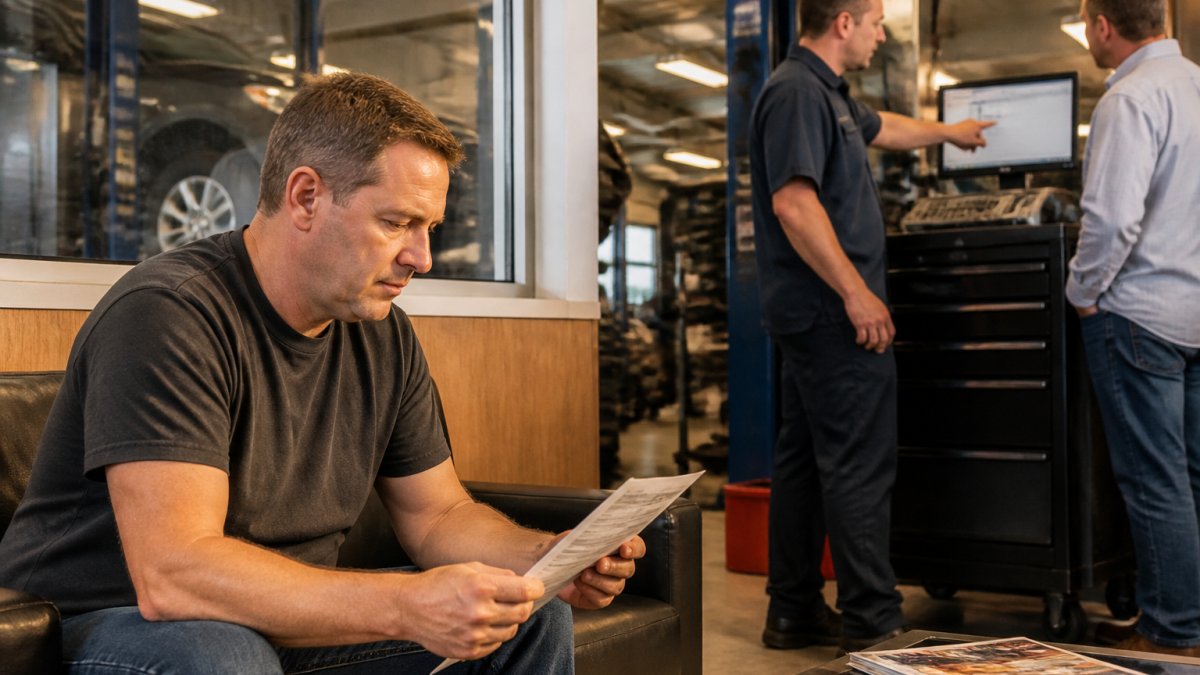
A second opinion is simply a fresh diagnosis from another qualified shop before you commit to a major repair. It's not an insult to your mechanic. It's smart consumer protection, especially on any repair estimate that feels high.
Here's how to do it right:
- Get the first diagnosis in writing. Ask for the specific fault and the recommended fix.
- Don't share the first estimate with the second shop. Let them reach their own conclusion.
- Compare the two diagnoses. If they match, you can trust the recommendation. If they don't, ask questions.
- Expect a diagnostic fee. Many shops charge one, and that's fair. It pays for the technician's time and modern diagnostic tools.
At Kerner's Auto, our ASE-certified team uses advanced diagnostic equipment to confirm a fault before recommending a single part. Evidence first, repair second.
How to Verify a Repair Recommendation
Verifying a recommendation means checking that the diagnosis is backed by evidence you can see or hear explained, not just a mechanic's hunch.
Start with the dashboard. When a shop ties a repair to a specific warning light, ask them to show you the scan-tool reading that triggered it. A diagnostic trouble code (DTC) is a starting point, not a verdict: the same code can have several causes, and a code alone never proves which part has failed.
Then ask for the evidence type. A credible diagnosis usually rests on one of these:
- A scan-tool reading with the specific code and freeze-frame data shown to you
- A visible worn or failed part, the glazed brake pad, the cracked belt, the leaking seal
- A measurable test result, a battery load test, a coolant pressure test, a tire tread depth reading in 32nds of an inch
- A photo or video of the failed component, which many shops now capture as a matter of course
If a shop can't point to one of those, ask them to walk you through how they reached the conclusion. A confident technician can; a guess often can't survive two follow-up questions.
Then listen and look yourself. Unusual noises, grinding brakes, a whining transmission, a rattle over bumps, are clues, and a good diagnosis explains the noise rather than just naming a part.
One more habit: ask whether the recommended repair is a fix or a guess. Replacing a part to "see if it helps" is a legitimate diagnostic step in some cases, but you should know that's what you're paying for before you authorize it.
What to Do When Car Repairs Are Too Expensive
When the repair bill lands and it's more than you expected, don't panic and don't rush. You have options.
First, ask the shop to break the work into stages. Fix the safety-critical items now and schedule the rest. Second, ask about flexible financing options, which many shops offer for larger jobs.
If the car needs a major repair, weigh the cost against the vehicle's value. A repair that costs more than the car is worth rarely makes sense.
At Kerner's Auto, we offer flexible financing through Synchrony Car Care to spread out unexpected repair costs.
Prioritize Repairs by Urgency to Control Car Repair Costs
Not every repair is equally urgent. Sorting them by urgency is the single best way to control car repair costs without cutting corners on safety.
| Priority | Repair Type | Action |
|---|---|---|
| Urgent (fix now) | Brakes, steering, tires, safety systems | Do not drive until fixed |
| Soon (within weeks) | Leaks, worn belts, weak battery | Schedule at next service |
| Can wait (monitor) | Cosmetic issues, minor wear | Track and revisit |
Brake pads worn thin, a failing brake system, or bald tires are safety issues. Fix those first, every time. A small coolant leak or a weak battery can wait a few weeks, but don't ignore them, or they become costly repairs.
This is where maintenance records pay off. When you know what's been done and when, you can prioritize by urgency with confidence. Breakdown prevention beats breakdown repair, every time.
Conclusion
The drivers who spend the least on car repair aren't the lucky ones. They're the ones who follow the maintenance schedule, ask the right questions, and verify before they approve. That discipline is the whole game.
If you'd rather hand that discipline to a shop you can trust, Kerner's Auto has been keeping vehicles on the road since 1973. Our ASE-certified technicians diagnose with real evidence, put every estimate in writing, and offer flexible financing through Synchrony Car Care when a repair can't wait. Book an appointment and get a straight answer on what your car actually needs.
Frequently Asked Questions
How can I tell if a mechanic is recommending an unnecessary repair?
Ask for the specific evidence behind the recommendation: the diagnostic trouble code, a measurement (brake pad thickness in millimeters, tread depth in 32nds of an inch), or a visible leak you can be shown. A trustworthy shop will walk you to the vehicle or print the diagnostic report. If the answer is vague or the repair is described as urgent without a measurement, get a written estimate and a second opinion before approving. Legitimate recommendations always trace back to a documented condition.
Should I get a second opinion on a car repair estimate?
Yes, for any repair above roughly $500 or anything described as urgent. Call ahead and ask whether the shop charges a diagnostic fee, since that cost is usually credited toward the repair if you proceed. Bring your written estimate so the second shop can compare line items: parts, labor hours, and the stated cause. Two independent estimates that agree give you confidence; a large gap tells you to ask more questions before spending.
What should I do if car repairs are too expensive?
Ask the shop to split the work into must-do-now safety items and items that can wait a few months. Get the estimate in writing with parts and labor separated, then ask about payment plans; Kerner's Auto offers flexible financing through Synchrony Car Care for unexpected repairs. If the total still exceeds your budget, price a used or rebuilt part option and compare against the cost of delaying. Never skip brakes, tires, or steering work to save money.
Can regular maintenance help prevent expensive car repairs?
It is the single most reliable way to keep car repair costs down. Following the maintenance schedule in your owner's manual, changing engine oil and filters on interval, rotating tires, and checking fluid levels catch wear before it becomes a breakdown. Small items like a $30 air filter or a coolant top-off are far cheaper than the repairs they prevent. Keep maintenance records too, since they protect warranty coverage and raise resale value.