 How-to
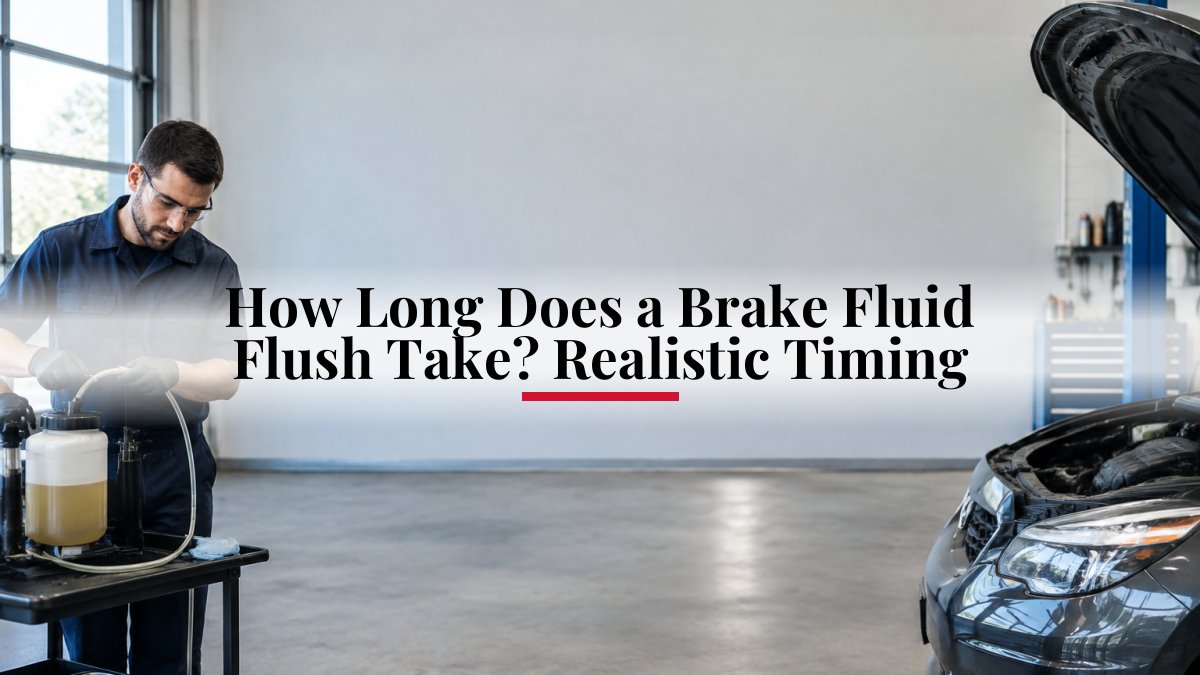
How Long Does a Brake Fluid Flush Take? Realistic Timing
Quick Summary
A brake fluid flush usually takes about one to two hours at the shop, including drop-off, the service and a pickup review. The hands-on labor typically runs under an hour, but the total depends on your vehicle and the method used. Ask the shop for an estimated time when you book.
- Most shops finish the labor in under an hour.
- Plan for a total visit of about one to two hours.
- A pressure bleeder is often faster than the two-person method.
- The two-person method often takes 45 minutes to an hour or more.
- Seized bleeder screws and ABS procedures can add time to the job.
Table of Contents
- What a Brake Fluid Flush Involves
- How Long a Brake Fluid Flush Takes at a Shop
- The Brake Fluid Flush Process Step by Step
- Pressure Bleeder Versus Two-Person Methods and Their Timing
- What Can Make a Brake Fluid Flush Take Longer
- Is a Brake Fluid Flush Really Necessary, and How Often
- Brake Fluid Flush Cost and Booking Your Service at Kerner's Auto
- Frequently Asked Questions
What a Brake Fluid Flush Involves
A brake fluid flush replaces the old fluid in your brake system with fresh fluid. The old fluid is drained out, the lines are refilled, and any air is pushed out of the system. Most shops finish the job in under an hour, but the exact time depends on your vehicle and the method used.
Brake fluid is hygroscopic, which means it pulls moisture from the air over time. That moisture lowers the fluid's boiling point and can lead to a soft or spongy brake pedal. Replacing the fluid restores its performance and protects brake components like the master cylinder, calipers and ABS module.
Watch out: never let brake fluid sit on painted surfaces. It can strip paint quickly, so wipe up any spills right away.
How Long a Brake Fluid Flush Takes at a Shop
Your total time at the shop may be longer than the labor time, since check-in and a final road test are part of the visit.
Most shops quote the job in labor hours, so ask for the estimated time when you book. Kerner's Auto offers complimentary shuttle services and loaner cars, so you can keep moving while your vehicle is being serviced. While the flush is underway, it is also a good time to consider whether the service is due at all, since 208 Tire & Auto Shop can help you weigh that question against your vehicle’s needs.
Time Breakdown by Service Stage
A typical flush moves through a few stages. Each one adds time:
- Inspection and prep: 5 to 10 minutes to check fluid condition and lift the vehicle
- Draining old fluid: 10 to 15 minutes at each wheel or through the master cylinder
- Refilling and bleeding: 15 to 30 minutes, depending on the method
- Final check and road test: 5 to 10 minutes to confirm firm pedal feel
Appointment Time Versus Technician Labor Time
The labor time is the hands-on work. The appointment time is what you plan around. Plan for a visit of about one to two hours to cover drop-off, the service itself and a quick review of the work when you pick up your car. To see what happens behind the scenes during a repair, read why car repairs take long and what really happens in the shop.
The time for each stage of a typical flush adds up to the total visit, as shown below.
| Stage | Typical time | Note |
|---|---|---|
| Inspection and prep | 5 to 10 minutes | Check fluid condition and lift the vehicle |
| Draining old fluid | 10 to 15 minutes | At each wheel or through the master cylinder |
| Refilling and bleeding | 15 to 30 minutes | Depends on the method used |
| Final check and road test | 5 to 10 minutes | Confirms firm pedal feel |
| Full visit | 1 to 2 hours | Includes drop-off, service and pickup review |
Typical time for each brake fluid flush stage
The Brake Fluid Flush Process Step by Step
Here is how a typical flush works:
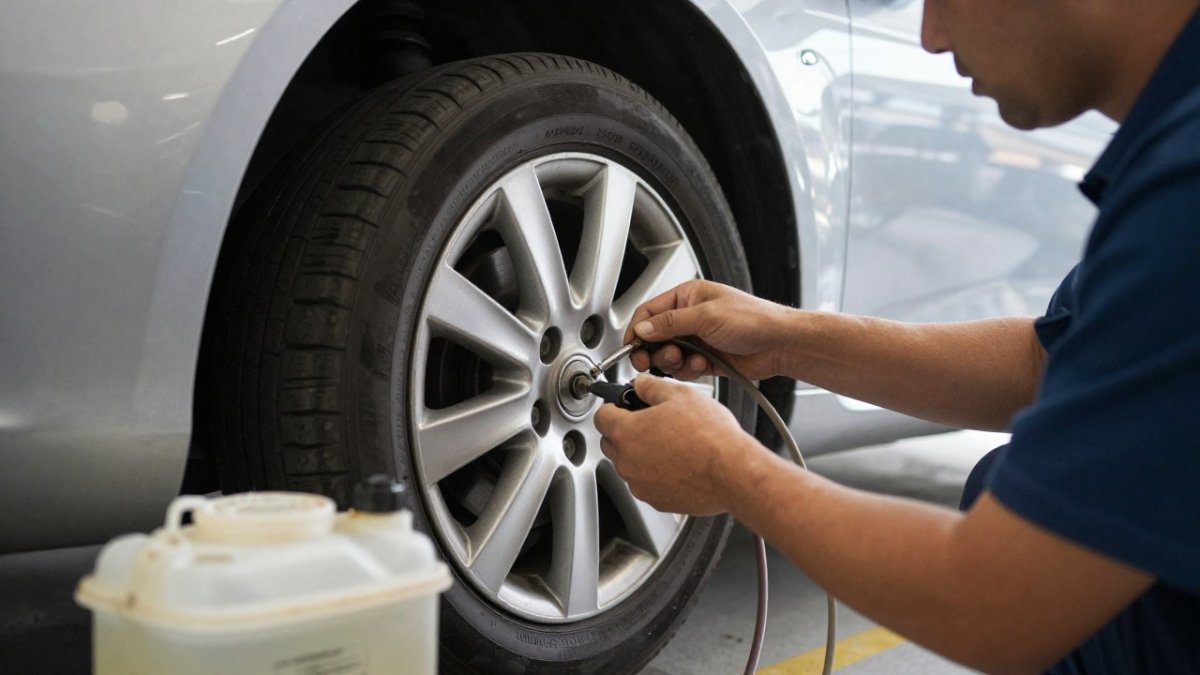
- Check the brake fluid level and color in the reservoir.
- Lift the vehicle and remove the wheels.
- Connect a catch container to the bleeder screw at the farthest wheel from the master cylinder.
- Open the bleeder screw and pump the brake pedal until old fluid stops flowing.
- Refill the reservoir with fresh fluid of the type your vehicle requires.
- Repeat the process at each wheel, in the correct order.
- Check for leaks and confirm a firm pedal before the road test.
Always use the DOT fluid specified in your owner's manual. Mixing fluid types can damage seals.
Pressure Bleeder Versus Two-Person Methods and Their Timing
Two common methods are used for a flush:
- Pressure bleeder: A tool pushes fluid through the system from the reservoir. This method is often faster than the alternative.
- Two-person method: One person pumps the pedal while another opens and closes the bleeder screws. This method usually takes longer, often 45 minutes to an hour or more.
The method your shop uses affects the total time. Ask which one they use when you book.
What Can Make a Brake Fluid Flush Take Longer
Most flushes finish close to the estimate, but several conditions can push the job past its quoted time. Knowing what they are, and how a technician handles them, helps you understand why a shop may call you with an update before the work is done.
- Seized or rusted bleeder screws. Bleeder screws sit exposed to road spray and salt. When they corrode, a technician cannot simply force them open without risking a broken screw or a damaged caliper. The fix may involve penetrating oil, heat, or careful extraction, adding 15 to 30 minutes per affected wheel. In the worst case, a caliper or wheel cylinder needs replacement, which turns a flush into a larger repair.
- Air trapped in the lines. Air enters when the reservoir runs dry during the flush, when a bleeder screw is opened too far, or when the system has a pre-existing leak. Removing air takes repeated bleed cycles at each wheel, and the technician may need to bleed the master cylinder separately. This can add 20 to 40 minutes.
- ABS and electronic brake controls. Vehicles with ABS, traction control, or electronic stability control may trap old fluid in the ABS pump or hydraulic control unit. A scan tool is needed to cycle the pump and push that fluid out. Without the tool, the flush is incomplete. This procedure adds 10 to 20 minutes and requires a shop with the right equipment.
- Severe fluid contamination or sludge. Fluid that has gone far past its service interval can leave deposits in the lines and calipers. The technician may need to flush with extra fluid or use a cleaning agent before the final fill, adding time and fluid cost.
- Leaks discovered during the flush. A leaking caliper, wheel cylinder, or line will show up when the system is pressurized. The technician should stop and contact you before proceeding, because a flush will not fix a leak and the repair must be authorized separately.
- Vehicle-specific access issues. Some vehicles place the bleeder screws in tight locations or require removal of underbody panels. Others have a bleeding sequence that must be followed precisely. These factors add time that a generic labor estimate may not capture.
Watch out: if a shop quotes a very low labor time for a vehicle with ABS, ask whether the quote includes an ABS bleed procedure. A flush that skips the ABS pump leaves old fluid in the system and may not deliver the pedal feel you expect.
When a delay factor appears, a reputable shop contacts you with the finding and an updated estimate before doing additional work. If you are not contacted, ask why.
Is a Brake Fluid Flush Really Necessary, and How Often
Many manufacturers recommend changing brake fluid every two to three years, but your owner's manual is the best guide for your vehicle. To see where a flush fits alongside other services, read the full car maintenance schedule for longevity. Fluid that has absorbed too much moisture can cause longer stopping distances and a spongy pedal.
Signs your fluid may need changing include a dark color, a spongy pedal or a warning light on the dashboard. A technician can test the fluid to confirm its condition.
Brake Fluid Flush Cost and Booking Your Service at Kerner's Auto
Brake fluid flush pricing depends on your vehicle, the fluid type and the method used. Kerner's Auto does not list fixed prices so contact the shop or visit the website for a current quote.
To schedule a brake service, book your brake fluid flush with Kerner's Auto. For more maintenance tips, browse the Kerner's Auto blog.
Kerner's Auto has been family owned and operated since 1973. Our ASE certified technicians can handle your flush and any related brake work, and our state-of-the-art facility is set up to keep your visit comfortable.
Frequently Asked Questions
How much should it cost to flush brake fluid?
Kerner's Auto does not publish fixed prices for brake fluid flushes, because the cost depends on the vehicle, the fluid specification it requires, and the service method used. For current pricing or a quote tailored to your car, contact Kerner's Auto directly or use the online appointment form on the website. Asking for an itemized estimate before the work begins lets you see what is covered, including fluid, labor and any inspection fees.
Are brake flushes necessary?
Brake fluid is hygroscopic, meaning it absorbs moisture from the air over time, which lowers its boiling point and can reduce braking performance under heavy use. Many manufacturers specify a replacement interval, so checking your owner's manual is the best starting point. A technician can also test the fluid condition during a brake inspection and recommend a flush only when the fluid shows real degradation or contamination.
How long should it take to flush brake fluid?
A professional brake fluid flush takes technician labor time that varies, and appointment time can run longer. Vehicle design, brake system condition and whether ABS bleeding is required can all change the total time. Ask the service advisor for an estimated appointment duration when you book.
How often should brake fluid be changed?
Many vehicles are scheduled for a brake fluid change every two to three years, but intervals vary by manufacturer and driving conditions. Vehicles driven in humid climates, towing heavy loads or driven hard may need attention sooner. Check the owner's manual for the specified interval and the required DOT fluid type, then have the fluid inspected during routine maintenance.