 ultimate-guide
Electric Vehicle Maintenance Checklist 2026
Table of Contents
- Why Your 2026 Electric Vehicle Maintenance Checklist Looks Nothing Like a Gas Car's
- The 2026 EV Maintenance Schedule: Monthly, Annual, and Mileage-Based Intervals
- Electric Vehicle Battery Maintenance: Charging Habits, Coolant, and Software
- EV Tire Maintenance: Pressure, Tread, Rotation, and Alignment
- Electric Car Brake Maintenance: Pads, Rotors, Fluid, and Regenerative Braking
- Cabin Air Filter, Windshield Washer Fluid, Wipers, and Suspension Checks
- Seasonal and Climate-Based EV Maintenance for Hot Summers and Cold Winters
- DIY Checks vs. Technician-Only Work: What You Can Safely Do Yourself
- Maintenance Costs and Ownership Budgeting
- Frequently Asked Questions
Last Updated: October 13, 2026
Why Your 2026 Electric Vehicle Maintenance Checklist Looks Nothing Like a Gas Car's
An electric vehicle maintenance checklist in 2026 covers far less than a gasoline car's, but the items it does include matter more. The core difference is simple: an EV maintenance schedule trades oil changes and spark plugs for battery health, tires, brakes, filters, and software. The U.S. Department of Energy's EV maintenance overview confirms that EVs generally require less routine service, yet still need regular inspection of specific systems.
That's the theory. Here's what actually matters.
The 2026 EV Maintenance Schedule: Monthly, Annual, and Mileage-Based Intervals
An EV maintenance schedule is a calendar-and-mileage plan that splits into quick monthly checks, annual service, and mileage-based replacements. Most of the work is inspection, not replacement, which is why EV owners often spend less time in the shop than gas-car drivers. But there is no single universal schedule: intervals vary by manufacturer, climate, and how you use the vehicle.
Monthly Owner Checks (15 Minutes)
Set aside 15 minutes each month for a routine inspection:
- Check tire pressure against the door-jamb placard (not the tire sidewall maximum)
- Look for uneven tread wear across each tire and compare inner, center, and outer edges
- Test the charging connector and cable for damage, fraying, or bent pins
- Confirm the windshield washer fluid level
- Note any dashboard warnings or software update prompts
Annual and Mileage-Based Service Intervals
| Interval | What Gets Checked | Typical Action |
|---|---|---|
| Monthly | Tires, charging equipment, fluids, warnings | Owner inspection |
| Every 6-12 months | Cabin air filter, wipers, brake fluid | Inspect or replace |
| Every 7,500-10,000 miles | Tire rotation, wheel alignment, suspension | Rotate and inspect |
| Annually | Battery coolant, thermal management, software | Technician service |
| As needed | Brake pads, rotors, high-voltage battery | Diagnose and repair |
How to Build a Schedule That Fits Your Vehicle
Three variables shift the intervals above:
- Model and manufacturer guidance. Some brands specify brake fluid replacement by time (often every two to three years), while others tie it to mileage. Cabin air filter intervals range from about 15,000 to 30,000 miles depending on the model. Your owner's manual is the authoritative source.
- Climate. Cold winters and road salt accelerate brake caliper corrosion and suspension wear, so annual brake inspections become more important. Extreme heat stresses the battery thermal management system and can shorten tire life.
- Use pattern. Frequent DC fast charging, heavy loads, towing, or stop-and-go delivery driving all increase wear on tires, brakes, and the cooling system. If any of these describe your driving, shorten the intervals rather than stretch them.
Exact service intervals vary by model, so always defer to your manufacturer's guidance rather than a generic schedule.
Electric Vehicle Battery Maintenance: Charging Habits, Coolant, and Software
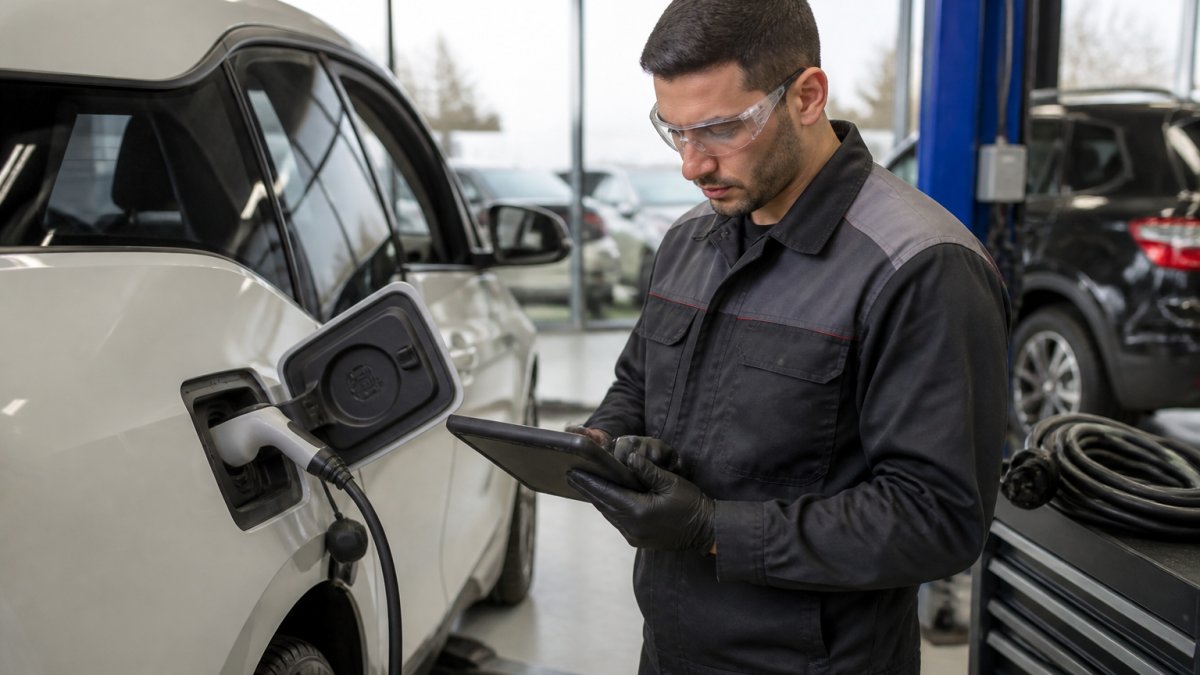
Electric vehicle battery maintenance is the single most important part of EV ownership, and it comes down to three things: how you charge, how the pack is cooled, and whether your software is current.
Charging Habits That Protect Battery Health
A common mistake is charging to 100% every night. For daily driving, many manufacturers recommend keeping the state of charge between roughly 20% and 80%, reserving a full charge for trips. Avoid leaving the car at a very low state of charge for extended periods, and rely on Level 2 charging at home when you can. These habits slow battery degradation and protect real-world range.
Battery Coolant, Thermal Management, and Software Updates
The battery coolant and thermal management system keep the pack within a safe temperature range, and they need periodic inspection. Software updates often adjust charging behavior, voltage balance, and range estimates, so install them promptly. Because this work touches high-voltage components, it belongs with a qualified technician.
EV Tire Maintenance: Pressure, Tread, Rotation, and Alignment
EV tire maintenance matters more than on a gas car because instant torque and heavier battery weight accelerate tread wear. Check tire pressure monthly, inspect tire tread depth, and rotate tires on schedule. Skipping wheel alignment after a curb strike or pothole can scrub a set of tires in short order.
Electric Car Brake Maintenance: Pads, Rotors, Fluid, and Regenerative Braking
Electric car brake maintenance is often misunderstood. Regenerative braking does most of the stopping, so brake pads and brake rotors last far longer than on a gas car. That's good news, with one catch: lightly used brakes can seize or corrode from lack of use, especially in wet or salted conditions. Have the brakes inspected annually, and replace brake fluid on the manufacturer's interval, because it absorbs moisture over time regardless of how often you brake.
Cabin Air Filter, Windshield Washer Fluid, Wipers, and Suspension Checks
The cabin air filter, often called the air conditioning filter, keeps dust and pollen out of the cabin and should be replaced on schedule, more often in dusty areas. Top off windshield washer fluid and replace worn windshield wipers before they streak. Have the suspension inspected for worn bushings and shocks, since the extra battery weight puts different loads on these wear-and-tear parts.
Seasonal and Climate-Based EV Maintenance for Hot Summers and Cold Winters
Cold winters and hot summers stress an EV differently than a gas car. In winter, expect reduced range and slower charging; keep the battery above a low state of charge and precondition the cabin while plugged in. In summer, extreme heat raises battery degradation risk, so park in shade where possible and avoid charging a hot pack at maximum rate. Seasonal checks of tires, fluids, and the cooling system keep the vehicle reliable year-round.
DIY Checks vs. Technician-Only Work: What You Can Safely Do Yourself
Some EV maintenance is safe for owners; some is not. Here's the line to respect:
- DIY: tire pressure, tread inspection, washer fluid, wiper blades, cabin air filter, visual inspection of charging equipment
- Technician-only: high-voltage battery service, battery coolant and thermal management, brake fluid, brake pads and rotors, suspension, diagnostics, and software-related repairs
Maintenance Costs and Ownership Budgeting
Budgeting for EV ownership is easier than for a gas car in one sense and trickier in another. You skip oil changes, spark plugs, and most exhaust-related service, but tires wear faster and battery or electronics repairs can be costly if they arise. Setting aside a monthly maintenance fund smooths out the surprises. Pricing depends on your model, region, and driving habits. For current prices, please contact us for a quote.
Typical EV Maintenance Costs
- New tires: $600-$1,200 or more for a set, depending on size and brand
How EV Costs Compare to a Gas Car
Over several years, EV owners generally spend less on routine maintenance because there is no oil, no spark plugs, and no timing belt. The trade-off is that tires often need replacement sooner due to instant torque and battery weight, and out-of-warranty repairs to high-voltage components or onboard chargers can be expensive. A common pattern is lower routine costs offset by occasional larger repairs, so setting aside a dedicated maintenance fund is a reasonable starting point for many owners.
What Warranty and Incentives Cover
Federal law requires manufacturers to warrant high-voltage battery packs for a minimum period, and many go beyond that. Check your warranty booklet for the battery, drivetrain, and emissions-related coverage terms, since these can cover major repairs that would otherwise be costly. Keep service records, they matter for warranty claims and resale value.
When you need diagnostics or a second opinion on a hybrid or EV, the U.S. EPA's electric vehicle resources and your owner's manual are good starting points for understanding what's normal.
Frequently Asked Questions
What maintenance does an electric vehicle need?
Electric vehicle maintenance centers on battery health, tires, brakes, cabin air filters, and fluids rather than oil changes. A 2026 EV maintenance checklist typically includes monthly tire pressure and tread checks, annual battery coolant and brake fluid inspections, cabin air filter replacement every 15,000 to 25,000 miles, and software updates. Regenerative braking reduces brake pad wear, so pads often last longer than on gas cars, but they still need periodic inspection. Following your manufacturer's EV maintenance schedule protects range and resale value.
How often should an electric vehicle be serviced?
Most EVs follow a 12-month or 10,000 to 12,000-mile service interval, whichever comes first, though some manufacturers stretch tire rotations to 6,000 to 8,000 miles. An EV maintenance schedule typically includes annual battery coolant checks, brake fluid inspection every two to three years, and cabin air filter replacement every 15,000 to 25,000 miles. Monthly owner checks like tire pressure and washer fluid take about 15 minutes. Always confirm intervals in your owner's manual, since model-specific guidance varies.
Do electric vehicles need oil changes or brake service?
EVs do not need oil changes because they have no engine, transmission fluid in the traditional sense, or exhaust system. They do need brake service, but less often than gas cars. Regenerative braking uses the motor to slow the vehicle, so brake pads and rotors wear more slowly. Even so, electric car brake maintenance still includes inspecting pads, rotors, and brake fluid, which absorbs moisture over time. Skipping brake fluid replacement can lead to corrosion and reduced stopping performance.
How should I maintain an EV battery?
Electric vehicle battery maintenance starts with charging habits. Keep the state of charge between 20% and 80% for daily driving, reserve charging to 100% for long trips, and avoid leaving the battery at a low state of charge for extended periods. Park in shaded areas during hot summers and plug in during cold snaps to let thermal management run. Watch for battery degradation through range loss and schedule a battery inspection if range drops noticeably. Manufacturer software updates also help manage voltage balance.
What should be included in a monthly EV maintenance checklist?
A monthly EV maintenance checklist should cover tire pressure, tire tread depth, windshield washer fluid, wiper blade condition, charging connector and cable inspection, and a quick walk-around for leaks or damage. Check that charging equipment is not frayed and that electrical connections are clean. Test cabin air filter airflow if you notice odors. Log any range changes or warning lights. These 15-minute checks catch small issues before they become expensive repairs.
What are the most common maintenance costs for an electric vehicle?
EV maintenance costs are generally lower than gas cars because there are no oil changes, spark plugs, or exhaust repairs. Common expenses include tire replacement, cabin air filters, brake fluid, battery coolant, and occasional wheel alignment. Tires often wear faster on EVs due to instant torque and heavier weight. Pricing depends on your model, tire size, and local labor rates, so request a quote from a qualified shop for accurate figures.
What happens to an EV after five years?
After five years, most EVs still hold a significant portion of their original range, though battery degradation varies by climate, charging habits, and mileage. High-voltage battery warranties typically cover eight years or 100,000 miles, so a five-year-old EV is usually still under coverage. Tires, cabin air filters, and brake fluid will likely have been replaced. Software updates may have added features. A pre-purchase inspection can confirm battery health and warranty status before you buy.
What is the average lifespan of an electric car?
With proper electric vehicle battery maintenance, many EVs are expected to last 15 to 20 years or 200,000 miles, though battery degradation accelerates in extreme climates. The high-voltage battery is the most expensive component, and replacement costs vary by model. Following the EV maintenance schedule, avoiding frequent charging to 100%, and keeping the battery in a moderate state of charge all extend lifespan. Regular inspections help catch coolant leaks or electrical issues early.