 Ultimate guide
Hybrid Vehicle Maintenance Requirements Explained
Last Updated: November 5, 2026
Quick Summary
Hybrid vehicle maintenance requirements explained simply: a hybrid needs the same routine care as any gas car, plus attention to the high-voltage battery and its cooling system. The gasoline engine still needs oil, filters, and belts, while the electric side adds checks on the hybrid battery, inverter coolant, and regenerative braking system.
- Full hybrids, mild hybrids, and plug-in hybrids carry different hardware, so service schedules vary by model.
- Most manufacturers publish separate normal and severe driving schedules, and short trips often qualify as severe.
- Regenerative braking makes pads last longer, but they can seize from lack of use, so inspections still matter.
- Keep battery cooling vents clear of bags, blankets, and pet hair so the traction battery stays cool.
- Never disconnect or probe the orange high-voltage cables; that work belongs to trained technicians.
Table of Contents
- What Hybrid Maintenance Actually Involves
- Your Hybrid Car Maintenance Schedule, Mapped Out
- Hybrid Car Maintenance vs Regular: What Changes and What Doesn't
- Is Hybrid Oil Change Different From a Standard Oil Change?
- Brakes, Tires, and the Regenerative Braking Advantage
- Hybrid Battery Care, Cooling Systems, and Fluid Checks
- Do Hybrid Cars Cost More to Repair? Warranty and Cost Context
- Booking Hybrid Service at Kerner's Auto
- Frequently Asked Questions
What Hybrid Maintenance Actually Involves
Hybrid vehicle maintenance requirements explained simply come down to this: a hybrid needs the same routine care as any gas car, plus attention to the high-voltage battery and its cooling system.
Hybrid vehicle maintenance is the scheduled inspection and replacement of fluids, filters, tires, and brakes on a vehicle that combines a gasoline engine with an electric motor, with added checks on the hybrid battery, inverter coolant, and regenerative braking system.
The gasoline engine still needs oil, filters, and belts. The electric side adds a few items you won't find on a standard service menu. Everything else, from tire rotations to wiper blades, follows the same rhythm you already know.
How Full Hybrids, Mild Hybrids, and Plug-In Hybrids Differ
Not every hybrid carries the same hardware, and that changes what gets serviced.
- Full hybrids (like a Toyota Prius or Ford Escape Hybrid) can drive on electric power alone at low speed. They have a larger traction battery and a dedicated cooling loop for it.
- Mild hybrids use a small motor-generator to assist the engine. There's no electric-only driving, and the battery is smaller, but it still has a cooling path worth checking.
- Plug-in hybrids (PHEVs) carry the largest batteries and charge from an outlet. They need the same engine service as a gas car plus battery and charging-system checks.
A common mistake is assuming a mild hybrid needs the same battery service as a plug-in. It doesn't. Your owner's manual spells out which schedule applies to your specific model, and that's the document to trust over any general guide.
Your Hybrid Car Maintenance Schedule, Mapped Out
Your hybrid car maintenance schedule follows the owner's manual first and the service interval table second. Most manufacturers group tasks by mileage: minor service at shorter intervals, major service at longer ones.
| Service Interval | What Gets Checked or Changed |
|---|---|
| Every 5,000-7,500 miles | Oil and filter change, tire rotation, multi-point inspection |
| Every 15,000-30,000 miles | Engine air filter, cabin air filter, brake inspection |
| Every 30,000-60,000 miles | Transmission fluid check, coolant inspection, battery cooling check |
| Every 60,000-100,000 miles | Spark plugs (engine-dependent), brake fluid flush, detailed hybrid system inspection |
Those ranges vary by manufacturer, so treat them as a starting map, not a rulebook. A full hybrid, a mild hybrid, and a plug-in hybrid can carry different service intervals for the same model year, and the owner's manual is the only document that resolves which schedule applies to your vehicle.
Reading Your Owner's Manual and Service Interval Table
Open the maintenance section of your manual and find the table that matches your driving conditions. Most manuals publish two schedules: one for "normal" driving and one for "severe" duty like frequent short trips, heavy traffic, or extreme temperatures.
Write your current mileage on the cover of the manual and note the next service due. That single habit prevents most missed intervals. If your manual lists a separate hybrid-system inspection interval, often tied to the inverter coolant and battery cooling path, note that alongside the engine service schedule so neither gets skipped.
Model-Specific Intervals and Why Generic Mileage Estimates Fall Short
A common pattern is for owners to compare their hybrid against a friend's or a forum post and assume the intervals match. They often don't.
Watch out: using a generic 5,000-mile oil interval when your manual specifies 10,000 miles (or the reverse) can either waste money or push service past the manufacturer's recommendation, and the latter can complicate a warranty claim.
If your manual is missing or you bought the car used, the manufacturer's owner site typically hosts a downloadable maintenance schedule by VIN. Bring that schedule to your first service visit and ask the shop to map the next three intervals against your current mileage.
Hybrid Car Maintenance vs Regular: What Changes and What Doesn't
Hybrid car maintenance vs regular gas-car care differs in three places: the brake system wears differently, the battery and inverter need cooling checks, and the engine may run less often. Everything else overlaps almost completely.
What stays the same: oil changes, tire rotation and pressure, air filters, wiper blades, coolant, and brake fluid. What shifts: regenerative braking means your brake pads often last longer, so a brake inspection matters more than a brake replacement. The engine cycling on and off means some fluids see different wear patterns, which is why following the manual's interval rather than a generic mileage rule matters.
Is Hybrid Oil Change Different From a Standard Oil Change?
No. A hybrid oil change uses the same engine oil and filter as a conventional car, following the same drain-and-refill procedure. The gasoline engine in a hybrid is a normal internal combustion engine, and it needs normal oil.
The one wrinkle: because the engine shuts off at stops and low speeds, some hybrids accumulate fewer engine hours per mile than a gas-only car. That doesn't mean you can skip oil changes. Oil degrades with time as well as mileage, so follow the manual's interval whichever comes first.
If you're due, you can schedule your oil change service and let our team handle it while you wait.
Brakes, Tires, and the Regenerative Braking Advantage
Regenerative braking is the hybrid feature that changes your brake math. Instead of turning motion into heat at the pads, the electric motor captures that energy and sends it back to the battery (Full Hybrid: Braking).
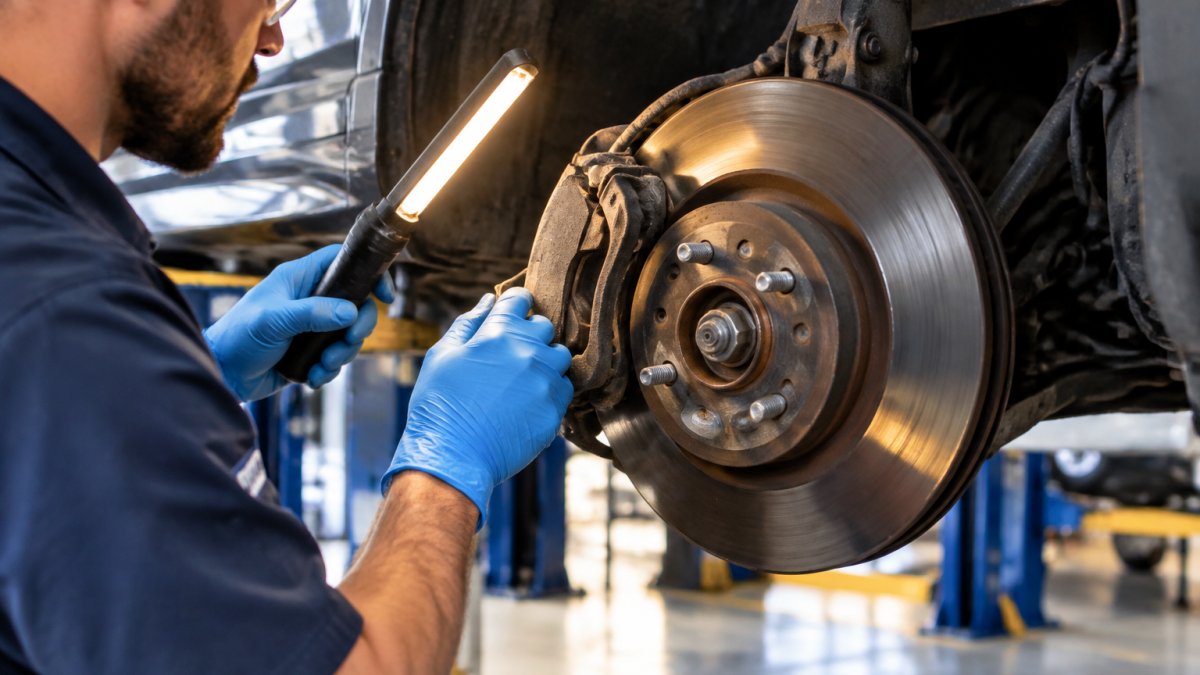
That advantage has a catch. Because the pads work less, they can seize or corrode from lack of use, especially in wet or salty conditions.
Tires matter just as much. If your brakes are due for a look, you can book brake service and inspection with our team.
Hybrid Battery Care, Cooling Systems, and Fluid Checks
Hybrid battery care is mostly about temperature and airflow. The traction battery lives under or behind the rear seat and relies on a cooling fan and duct to stay in its happy range.
The 12-volt battery is a separate item and the one most likely to strand you. It powers the electronics that wake up the hybrid system, and it ages like any other small battery.
The cooling system has two loops on many hybrids: one for the engine, one for the inverter and battery. Both need their fluid levels checked and their coolant replaced on the manual's schedule. Ignoring inverter coolant is a costly shortcut.
High-Voltage Safety: What Owners Should Never Service Themselves
The orange cables under the hood carry high-voltage direct current. Never disconnect them, never probe them, and never open the battery pack. That work belongs to trained technicians with the right insulated tools and safety procedures.
What you can safely do: check tire pressure, top up washer fluid, replace wiper blades, and keep the battery cooling vents clear. Everything touching orange cable is off-limits.
Do Hybrid Cars Cost More to Repair? Warranty and Cost Context
Do hybrid cars cost more to repair? Sometimes, but not across the board. Routine items like oil changes, tires, and filters cost about the same as any gas car.
Routine service. Oil and filter changes, tire rotations, air and cabin filters, wiper blades, and brake fluid flushes generally fall in the same range as a conventional car of similar size.
Hybrid-specific repair. Traction battery replacement, inverter service, and hybrid cooling-system work are the line items that drive cost differences.
Warranty Coverage, Battery Warranties, and Maintenance Records
Warranty coverage is the cost lever most owners underuse. Manufacturer warranties often cover hybrid battery components for a set period, and terms vary by make, model, and year.
Maintenance records matter here. Manufacturers can deny a warranty claim when required service was skipped or undocumented, so keep receipts and note the date and mileage of each service (Auto Warranties and Auto Service Contracts).
The other cost lever is who does the work. If you're weighing your options, our guides on finding reliable hybrid car service and what a hybrid repair shop should have walk through the questions to ask before you book.
Booking Hybrid Service at Kerner's Auto
Bringing your hybrid to a shop with advanced diagnostic capability removes the guesswork. At Kerner's Auto, our ASE-certified technicians work in our nine-bay facility and service all makes and models with advanced diagnostic services.
When you book, bring your owner's manual and any service records you have. We'll review your maintenance needs, inspect the brakes and tires, and flag anything that needs attention before it becomes a bigger repair.
Don't wait for a warning light to schedule the routine work that prevents one. Schedule your preventative maintenance service and let our team keep your hybrid ready for the road ahead.
Frequently Asked Questions
What maintenance is required on a hybrid car?
Hybrid maintenance covers the same routine items as any gas car: oil and filter changes, tire rotations, brake inspections, and fluid checks. On top of that, hybrids need attention to the hybrid battery cooling system, inverter coolant, and the 12-volt battery. Follow the service interval table in your owner's manual, since intervals vary by model. Regenerative braking often stretches brake pad life, but brakes still need inspection for rust and fluid condition.
How often does a hybrid car need an oil change?
Most hybrid engines run less than a conventional engine because the electric motor handles low-speed driving, so some owners stretch oil changes. Don't guess. Check your owner's manual for the recommended interval, which is often based on miles or months, whichever comes first. Short trips and stop-and-go commuting count as severe service and usually call for shorter intervals. When in doubt, follow the manual rather than the dashboard reminder alone.
Is hybrid car maintenance different from regular car maintenance?
The core tasks are the same: oil changes, tire care, brake checks, and fluid top-ups. Hybrid car maintenance vs regular differs in a few areas. Regenerative braking reduces brake wear but adds inspection points. The hybrid battery and inverter have their own cooling systems that need coolant checks. High-voltage components require trained technicians. Everything else, from air filters to wiper blades, follows the same rhythm as a gas vehicle.
Do hybrid cars cost more to repair?
Routine hybrid maintenance usually costs about the same as a comparable gas car. Repairs can cost more when they involve hybrid-specific parts, such as the traction battery or inverter, but those failures are uncommon and often covered by long battery warranties. Brake work may cost less over time because regenerative braking slows pad wear. Ask for a written estimate before work begins so you know what you're paying for.
How long do hybrid car batteries last, and do they need maintenance?
Most hybrid traction batteries are designed to last well beyond 100,000 miles, and warranty coverage varies by manufacturer, so check your warranty booklet. They don't need fluid changes like an engine, but they do rely on a cooling system that should be checked at service intervals. Keep the battery cooling vents clear of dust and pet hair. Watch for warning lights or reduced fuel economy as signs to have the battery checked.
Can I still drive my hybrid car if I run out of gas?
Generally no, or only briefly. In most full hybrids the gas engine drives a generator that charges the battery, so with an empty tank the car loses its power source and will not run for long on battery alone. Plug-in hybrids can travel on electric power until the charge runs out, but they still need gas for longer trips. Treat a low fuel warning as urgent in any hybrid.
Hybrids reward owners who follow the manual and stay ahead of the small stuff. If you're not sure where your car stands, that's a good reason to have it looked at. Get started with Kerner's Auto and keep your hybrid running the way it was built to.