 how-to
Signs of Inaccurate Car Diagnostic: What to Watch
Table of Contents
- Signs of Inaccurate Car Diagnostic: How to Tell
- Common Check Engine Light Causes and False Positives
- How to Interpret OBD-II Scanner Codes Correctly
- Frequently Asked Questions
Last Updated: October 7, 2026
Signs of Inaccurate Car Diagnostic: How to Tell
An inaccurate car diagnostic is a wrong or misleading scan tool result, usually a code that doesn't match how the car drives. At Kerner's Auto, we often see a driver replace a part, only for the same problem to return, the scan tool pointed at a symptom, not the cause.
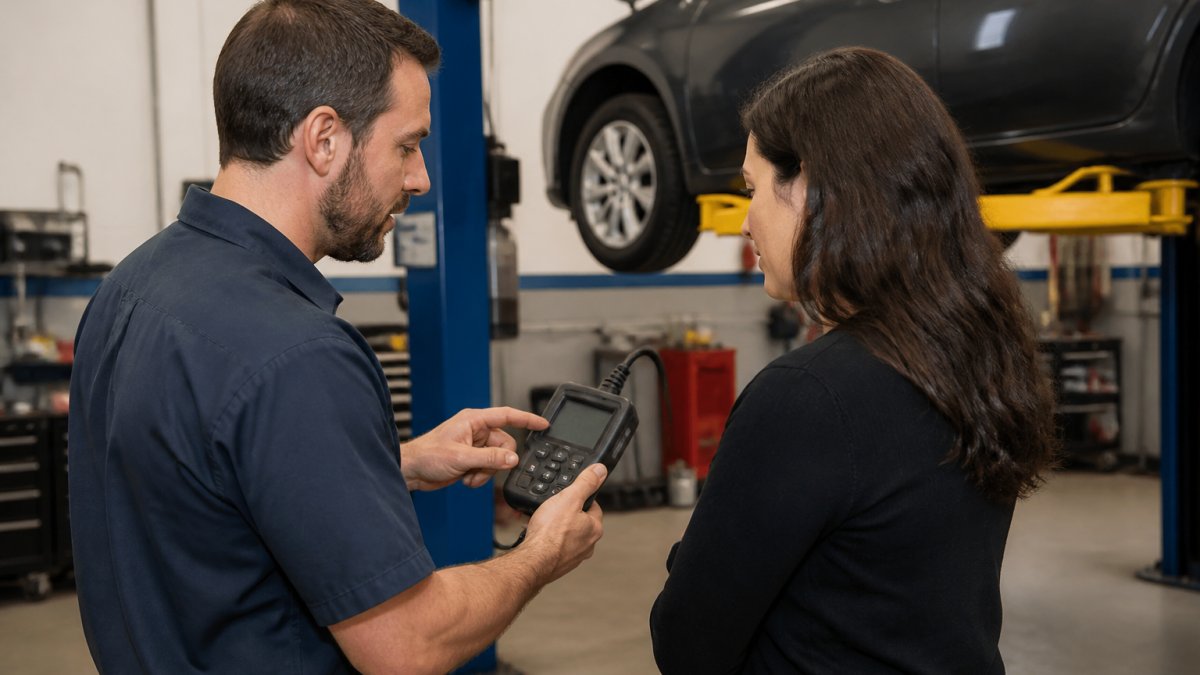
Watch for these warning signs:
- A steady check engine light that never changes, even after a repair
- Rough idling or acceleration hesitation no code explains
- Hard starting with no stored diagnostic trouble codes
- The same fault code reset returns within a few drive cycles
- A shop that clears codes instead of testing the circuit
The clearest sign: a shop that reads one code and quotes a repair without testing live data is guessing.
A mass air flow sensor, oxygen sensor, or wiring fault can all trigger the same code. Only real testing tells them apart.
Common Check Engine Light Causes and False Positives
The most common check engine light triggers are a loose gas cap, a failing oxygen sensor, a dirty mass air flow sensor, or a small vacuum leak. But a scanner can also flag a false positive, a code set by a brief glitch, not a real fault.
A momentary voltage spike, low battery, or poor ground can trip a meaningless code, so one code read never justifies a repair.
Real causes include lean mixture or rich mixture from a vacuum or fuel issue, a worn catalytic converter, engine misfire from plugs, coils, or injectors, or a failing sensor sending a bad voltage output to the computer.
To tell a real fault from a false one, check fuel trim on a real-time data stream: near normal means a possible glitch, far from spec means the fault is real.
How to Interpret OBD-II Scanner Codes Correctly
An OBD-II scanner code is a starting point, not a verdict. It tells you which system set a fault, not which part failed, so pair it with live data and a physical test.
| What You See | What It Usually Means | What to Do Next |
|---|---|---|
| Steady check engine light | Minor or emissions fault | Read codes, check live data |
| Flashing check engine light | Active engine misfire | Stop driving, get it checked |
| Code returns after reset | Real, repeatable fault | Test the circuit, not the part |
A flashing light means raw fuel is reaching the catalytic converter and can destroy it fast, never ignore it.
Sensor calibration matters too: an unchecked scan tool can misread a good sensor as bad, so verifying diagnostic accuracy is part of an honest diagnosis.
Why diagnostic codes return after repair: the wrong part was replaced, the real cause is wiring rather than the sensor, or the repair lacked a proper fault code reset and drive cycle.
That gap between "where to look" and "what to fix" is where inaccurate diagnostics live, and where a trained eye with the right equipment earns its keep.
Frequently Asked Questions
Can a car diagnostic test be wrong?
Yes. An OBD-II scanner reads what the ECU reports, and that data can be misleading. A loose gas cap, a weak battery, or a sensor that's drifted out of calibration can all trigger a code that points to the wrong part. A flashing check engine light usually means an active misfire, while a steady light is less urgent. That's why a code alone isn't a diagnosis: a technician needs to verify the fault with live data and a drive cycle before recommending a repair.
What are the common signs of a misdiagnosed vehicle issue?
Watch for a repair that fixes nothing, the same code returning within a few drive cycles, or a shop that clears codes without explaining why. Other red flags: no live data stream shown to you, no road test, and a quote that replaces multiple sensors at once. Rough idling, hesitation during acceleration, or a sudden drop in fuel efficiency after a "fix" all suggest the real fault was missed. Ask to see the freeze-frame data behind the code before you approve work.
How do ASE-certified technicians ensure diagnostic accuracy?
ASE-certified technicians follow a verification process rather than trusting a single code. They check tool calibration, review freeze-frame and live data, confirm fuel trim and voltage output at the sensor, and run a drive cycle to see if the fault returns. They also compare the reported symptom against the code, since a mass air flow or oxygen sensor fault can mimic a vacuum leak. If the code and the symptom don't match, the diagnosis gets rechecked before any parts are ordered.
A wrong diagnosis costs you twice: once for the part you didn't need, and again when the real problem comes back. At Kerner's Auto, our ASE-certified team uses advanced diagnostic tools to trace a fault to its true source, not just its first symptom. We back that up with loaner cars, a complimentary shuttle, and flexible financing through Synchrony Car Care so a surprise repair doesn't stall your week. Get started with Kerner's Auto and get a diagnosis you can trust.