 Comparison
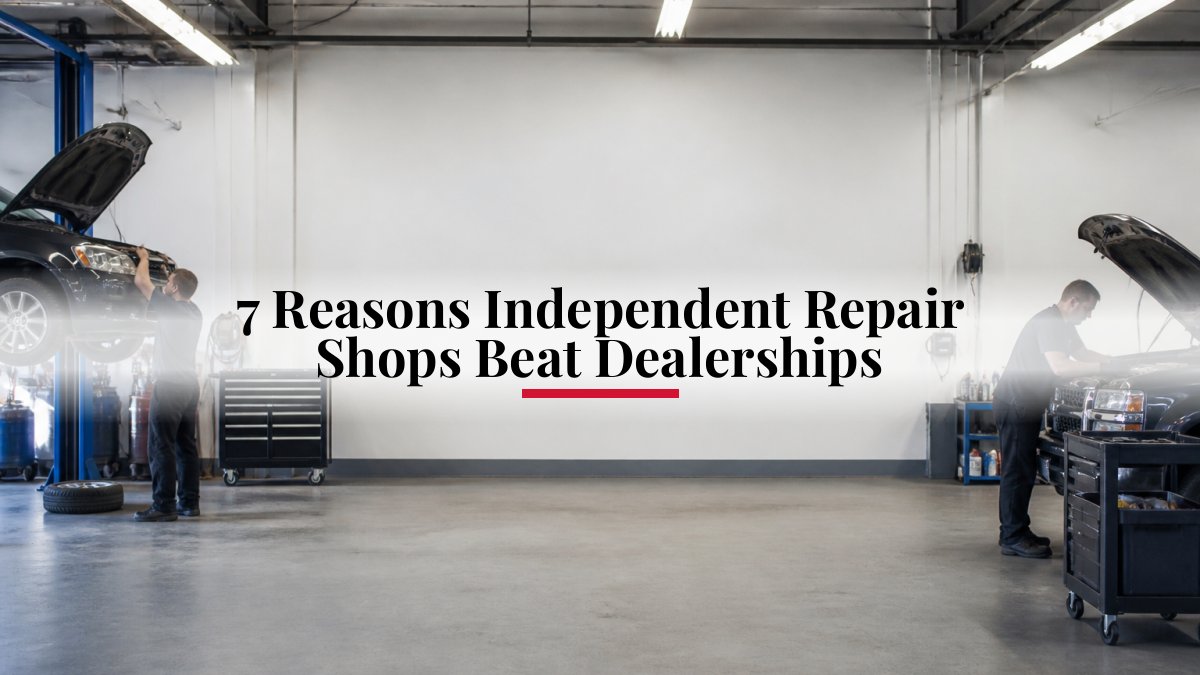
7 Reasons Independent Repair Shops Beat Dealerships
Last Updated: November 4, 2026
Quick Summary
Independent repair shops are locally owned businesses outside the manufacturer's franchise network, and they often win on lower labor rates, faster booking, and flexible parts options. Use them for routine maintenance and out-of-warranty vehicles, but keep recall work at a dealership since recall repairs are free there.
- Compare written estimates line by line: labor rate, labor hours, parts price, and diagnostic fees.
- Confirm ASE certification, state licensing, written warranty, and garage-keepers insurance before committing.
- Manufacturer warranty stays intact with independent routine maintenance if work meets specifications and you keep records.
- Recall repairs are free at dealerships, so check your VIN for open recalls first.
- Hybrid and EV service requires high-voltage certification and specialized diagnostic tools.
Table of Contents
- Independent Mechanic vs Dealership: The Real Differences
- How to Find a Trustworthy Mechanic
- Questions to Ask an Auto Mechanic Before You Commit
- Parts Options: OEM, Aftermarket, and OEM-Equivalent
- Warranty, Recalls, and Manufacturer Requirements
- Match the Shop to Your Repair Type and Vehicle Age
- Schedule Service at Kerner's Auto
- Frequently Asked Questions
Independent Mechanic vs Dealership: The Real Differences
The choice between an independent mechanic vs dealership comes down to who you trust with your keys, your budget, and your time. At Kerner's Auto, we've watched drivers wrestle with this decision since we opened our doors in 1973, and the answer isn't the same for every car or every repair. Independent repair shops are locally owned businesses that service vehicles outside the manufacturer's franchise network. Below, we'll break down where each option wins, so you can match the shop to the job instead of defaulting to whoever has the biggest sign.
Cost and Labor Rates: A Like-for-Like Comparison
Broad claims that independents are cheaper are not useful when you are standing at a service counter. What matters is how the estimate is built. Ask both a dealership and an independent shop to quote the same repair, same symptom, same vehicle, same parts category, and compare four line items: the labor rate, the labor hours billed, the parts price, and any diagnostic or shop-supply fees.
Dealership service departments and independent shops each have their own cost structures, and the difference shows up in the estimate. The savings are not automatic. A dealer may include a multipoint inspection, a wash, or a loaner in the price, and an independent shop may charge a diagnostic fee that is credited only if you approve the repair. Compare the out-the-door total, not the headline rate.
A practical way to run the comparison: request a written estimate with parts and labor broken out, ask whether the diagnostic fee is credited toward the repair, and ask what the shop charges if the diagnosis shows no repair is needed. Then compare the same parts category, OEM to OEM, or OEM-equivalent to OEM-equivalent, so you are not comparing a premium part against a budget one. Our line-by-line guide to verifying repair quotes helps you judge parts and pricing on any estimate.
Convenience and Appointment Availability
Getting an appointment at a dealership can mean waiting days for a slot, then leaving your car for the better part of a week. Local ownership also means you can talk to the person who actually runs the place. Kerner's Auto offers complimentary shuttle service and loaner cars, along with a comfortable waiting area, so a routine maintenance visit doesn't wreck your day. For commuters juggling work and family, that flexibility matters as much as the price.
Watch out: faster booking does not always mean faster completion. Ask for an estimated completion time in writing and confirm whether the shop has the parts on hand or must order them, since a part on backorder can erase any scheduling advantage.
How to Find a Trustworthy Mechanic
Finding a trustworthy mechanic starts with verification, not gut feeling. The goal is to confirm three things before you hand over your keys: that the shop is legally allowed to operate, that its technicians are qualified for your vehicle, and that its business practices protect you if something goes wrong. Work through the checks below in order, and keep notes so you can compare shops side by side.
Verify Certifications and Licensing
Start with the credentials you can look up rather than take on faith. ASE certification means a technician has passed nationally recognized testing; you can confirm a shop's technicians through the ASE professional directory rather than relying on a wall plaque. State licensing or registration confirms the shop meets legal operating standards, and your state's motor vehicle or consumer affairs agency typically maintains a lookup. Ask specifically which technicians will touch your car and whether the shop holds any manufacturer-specific or specialty credentials for your make, hybrid system, or EV high-voltage work.
Check Reviews for Patterns, Not Scores
A single star rating tells you little. Read the most recent reviews and look for patterns: repeated mentions of accurate estimates, calls before added work, and clear explanations matter more than a perfect score. Pay close attention to how the shop responds to criticism. A shop that answers a negative review with specifics and an offer to make it right is behaving better than one that argues or ignores complaints. Cross-check across more than one platform so you are not reading a curated feed.
Confirm Insurance, Warranty, and Written Estimates
Ask for the shop's repair warranty in writing and confirm what it covers: parts only, labor only, or both, and for how long. Ask the shop what liability and garage-keepers insurance it carries, which protects you if the vehicle is damaged on the premises or on a test drive. Require a written estimate before work begins and confirm the shop will call for approval before any added work. These three items, warranty, insurance, and written authorization, are the clearest signals that a shop expects to be held accountable.
Inspect the Shop and the Diagnostic Equipment
A short walk-through tells you a lot. Look for a clean, organized bay and technicians who can explain what they are doing. Ask what diagnostic equipment the shop uses and whether it can read the modules on your vehicle, including advanced driver-assistance systems and hybrid or EV systems. A shop that cannot access your vehicle's software will send you elsewhere for calibration or module work, which adds time and cost.
Watch out: a shop that will not put its warranty, insurance, or estimate policy in writing is telling you something, treat that reluctance as a reason to keep looking.
If you want a deeper walkthrough, our guide on how to choose a mechanic lays out seven steps for vetting a shop before you hand over your keys.
Questions to Ask an Auto Mechanic Before You Commit
Ask these questions before any work begins, and listen for straight answers. A shop that hesitates on warranties or estimates is telling you something.
- Can I get a written estimate before you start, and will you call me before any added work?
- What happens if the diagnosis changes once you're inside the vehicle?
- Do you offer a repair warranty, and how long does it cover parts and labor?
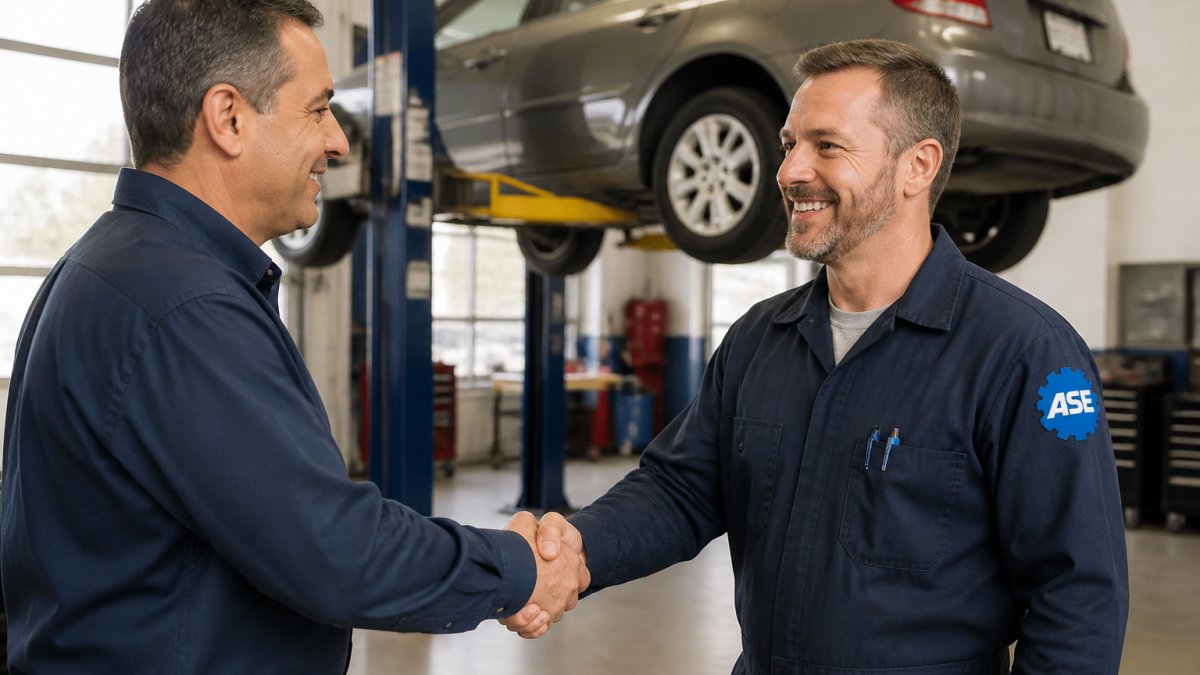
- Are your technicians ASE certified, and do you have experience with my make and model?
- Will you show me the failed part or explain the diagnostic findings?
For a fuller list you can bring to the counter, see what to ask before car repair.
Parts Options: OEM, Aftermarket, and OEM-Equivalent
Parts options drive both repair costs and how long the fix lasts. OEM parts are made by or for the vehicle manufacturer. Aftermarket parts come from third-party manufacturers and often cost less. OEM-equivalent parts meet or exceed original specifications without the dealer markup. Each has a place: OEM makes sense for warranty-sensitive or safety-critical components, while quality aftermarket and OEM-equivalent parts handle many routine repairs well. Ask which category the shop is quoting and why. Our line-by-line guide to verifying repair quotes helps you judge parts and pricing on any estimate.
Warranty, Recalls, and Manufacturer Requirements
Manufacturer warranty coverage stays intact when you use an independent shop for routine maintenance, as long as the work meets the manufacturer's specifications and you keep records. Recall repairs are different: those are performed free at a dealership, so check your vehicle identification number for open recalls before assuming a shop can handle it. Keep every receipt and service record. If a warranty claim ever comes into question, documented preventive maintenance is your proof that the vehicle was cared for properly.
Match the Shop to Your Repair Type and Vehicle Age
The right choice depends on the job and the age of your car. Use this as a quick decision guide:
| Situation | Better Fit | Why |
|---|---|---|
| Routine maintenance and oil changes | Independent shop | Lower labor rates, faster booking |
| Open safety recall | Dealership | Recall work is free and manufacturer-mandated |
| Older vehicle, out of warranty | Independent shop | Flexible parts options, cost savings |
| Complex diagnostics on a new model | Either, verify equipment | Needs advanced diagnostic tools and training |
| Hybrid or EV service | Shop with EV training | Requires high-voltage certification and specialized tools |
| Warranty-sensitive repair | Dealership or spec-compliant shop | Protects manufacturer warranty coverage |
Modern vehicles, including hybrids, EVs, and models loaded with advanced driver-assistance systems, often demand specialized training and diagnostic equipment. Ask any shop whether their technicians have brand-specific knowledge and the tools to read your vehicle's systems before you commit.
Schedule Service at Kerner's Auto
If you've been burned by unnecessary repairs or a shop that couldn't diagnose a stubborn noise, that experience is exactly why independent repair shops earn trust one honest estimate at a time. At Kerner's Auto, our ASE-certified technicians handle all makes and models in a nine-bay facility with advanced diagnostic services. We offer complimentary shuttle service and loaner cars to keep you moving, flexible financing through Synchrony Car Care for unexpected repairs, and a comfortable waiting room with free Wi-Fi. You can book an auto repair appointment online in a few minutes, or learn more about our shop and technology before you call.
Frequently Asked Questions
Are independent repair shops less expensive than dealerships?
Independent repair shops typically have lower overhead than dealership service departments, which often means lower labor rates and more competitive pricing on parts. You may also save on diagnostic fees. However, costs vary by shop and repair type. Always request a written estimate and compare like-for-like services, including parts quality and warranty terms, before deciding.
Can an independent repair shop service a car under warranty?
Yes. Under the Magnuson-Moss Warranty Act, a manufacturer cannot void your warranty simply because you used an independent shop. The shop must use appropriate parts and follow the manufacturer's maintenance schedule. Keep detailed records of all repairs and receipts. For recall repairs, however, you generally need to visit a dealership because those are performed at no cost by the manufacturer.
How do I know if an independent mechanic is trustworthy?
Look for ASE certifications, state licensing, and a clean, organized facility. Read recent reviews and ask about written estimates, diagnostic fees, and repair warranties. A trustworthy shop will explain the work in plain language, show you failed parts, and never pressure you into unnecessary repairs. Start with a small job like an oil change to test the experience before committing to major work.
Do independent repair shops work on all makes and models?
Many independent shops service all makes and models, including hybrids and EVs, but coverage varies. Before booking, ask whether the shop has diagnostic equipment and technician training for your specific vehicle. Shops with brand-specific knowledge and advanced diagnostic tools can handle complex repairs, including advanced driver-assistance systems, without sending you to a dealership.
Your car shouldn't sit for days while you wait on a callback. Kerner's Auto has served local drivers since 1973 with straight answers, written estimates, and work that holds up. Get started with Kerner's Auto and schedule service that fits your week, not the other way around.