
 How-to
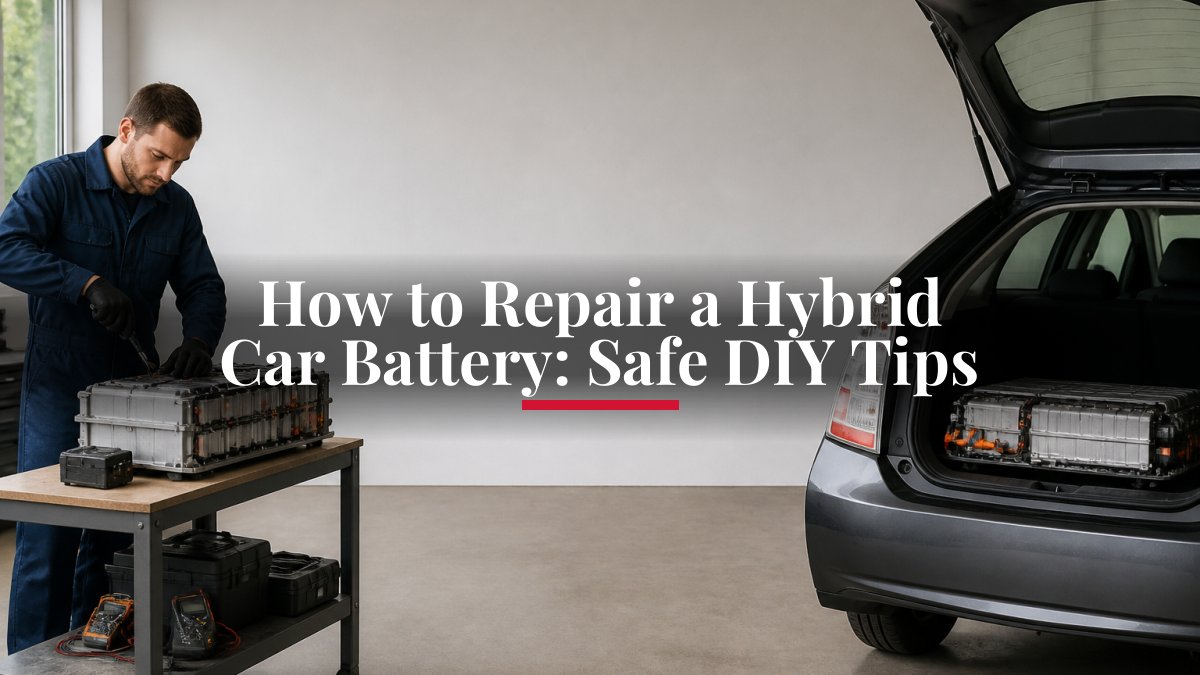
How to Repair a Hybrid Car Battery: Safe DIY Tips
Last Updated: November 1, 2026
Quick Summary
Repairing a hybrid car battery starts with triage: read the warning light, stop hard driving, pull diagnostic trouble codes with a hybrid-capable scan tool, and log battery health data before deciding to monitor, repair, or replace. Safe DIY work is limited to low-voltage tasks like reading codes and cleaning terminals; never open the pack or disconnect high-voltage cables without training and proper gear.
- A steady amber hybrid light means a stored code exists; a flashing light or red battery icon is urgent.
- Hybrid-specific codes need a scan tool with hybrid support, not a basic OBD-II reader.
- One module reading low while the rest sit normal is your suspect module.
- You can safely read codes, check 12-volt connections, and clean terminals yourself.
- Ask any shop in writing what is covered, for how long, and whether labor is included.
Table of Contents
- Start With a Triage Flow: From Warning Light to Diagnosis
- Signs of Hybrid Battery Failure You Should Not Ignore
- High-Voltage Safety Boundaries for DIY Readers
- Repair or Replace Individual Cells and Modules
- How to Choose the Best Hybrid Car Diagnostic Service
- Hybrid Battery Replacement Cost and Repair Durability
- Book a Hybrid Battery Inspection at Kerner's Auto
- Frequently Asked Questions
Start With a Triage Flow: From Warning Light to Diagnosis
A hybrid car battery rarely dies without warning. The dashboard tells you something is wrong long before the car refuses to start, and how you respond in that first hour decides whether you face a cheap fix or a four-figure replacement.
Here is a practical triage flow, in order:
- Read the warning light. Note the color, whether it flashes, and what else lit up with it.
- Stop hard driving. Park safely and let the pack cool before you inspect anything.
- Pull the codes. A scan tool reads the diagnostic trouble codes stored by the battery control module.
- Log the battery health data. Capture state of charge, voltage, and temperature readings.
- Decide: monitor, repair, or replace. Match the data to the symptoms before spending a dime.
Do not skip straight to step five.
Read the Warning Light Before You Touch Anything
A steady hybrid system warning light usually means the car has logged a fault but still runs. A flashing light or a red battery icon is different. Slow down and treat it as urgent.
Check the dash for these clues:
- Steady amber light: a stored code exists. Read it before driving far.
- Flashing light: the pack is stressed. Stop and let it cool.
- Red battery icon: the high-voltage system may be offline. Do not force it.
- Check engine light paired with the hybrid light: often an inverter or sensor fault, not the pack itself.
Write down what you see. That note saves diagnostic time later.
Pull Diagnostic Trouble Codes and Battery Health Data
Diagnostic trouble codes are the stored fault messages your hybrid's computers record when something drifts out of range. They point you to the module, sensor, or cell block at fault.
A basic OBD-II scan tool reads engine codes. Hybrid-specific codes, the ones that actually describe battery health, need a scan tool with hybrid support. Look for these data points:
- State of charge across the pack
- Block voltage for each module
- Temperature at the intake and exhaust of the cooling path
- Internal resistance trends if your tool reports them
Compare block voltages. A healthy pack holds its modules within a tight band. One module reading low while the rest sit normal is your suspect.
Signs of Hybrid Battery Failure You Should Not Ignore
Most hybrid battery failures announce themselves through behavior, not a single dramatic event. The signs of hybrid battery failure build slowly, which is exactly why drivers miss them.
Watch for this cluster of symptoms:
- Fuel economy drops for no clear reason
- The engine runs more often, even at low speeds
- The battery gauge swings wildly or rarely reaches full
- Acceleration feels flat when the electric motor should assist
One symptom alone might be nothing. Three together usually means the pack is aging.
A common mistake is blaming the 12-volt auxiliary battery for everything. It causes odd electrical gremlins, sure. But repeated hybrid warnings with poor fuel economy point to the high-voltage pack, not the small one under the hood.
High-Voltage Safety Boundaries for DIY Readers
The high-voltage battery in a hybrid can deliver a lethal shock. That is not a scare tactic. It is the boundary that separates a safe DIY job from a hospital visit.
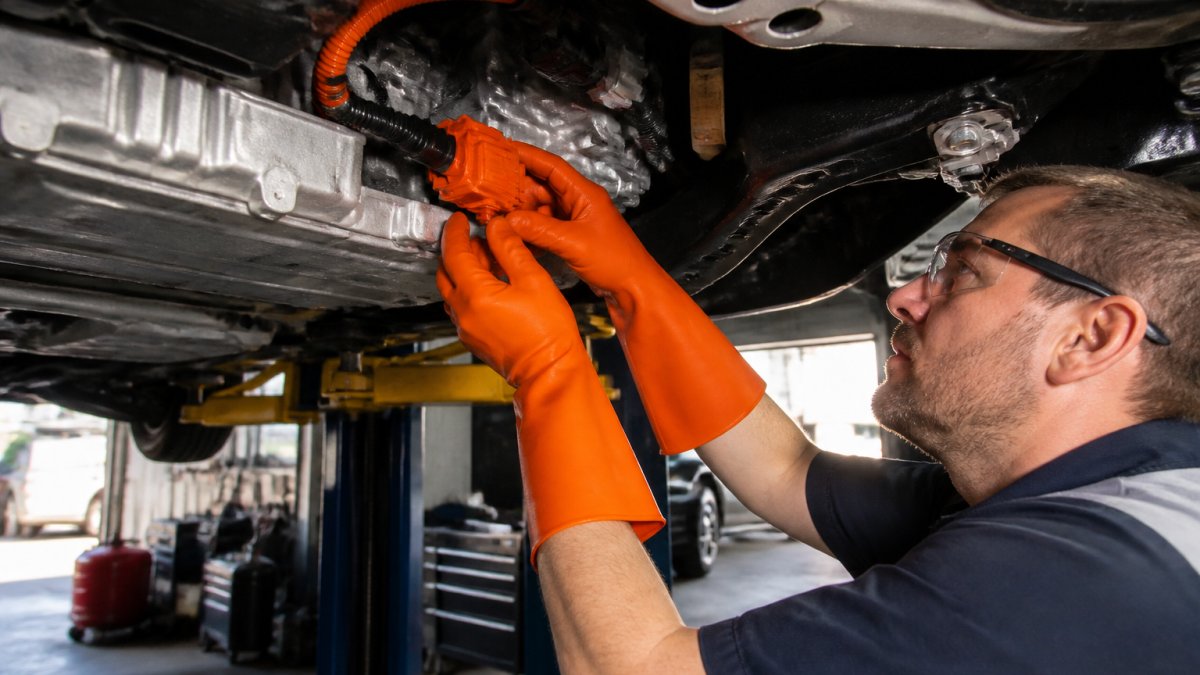
Here is where we draw the line. You can safely do the low-voltage work: reading codes, checking 12-volt connections, inspecting cooling fans and airflow, and cleaning corrosion from battery terminals with the proper terminal cleaner.
You should not open the pack, disconnect high-voltage cables, or remove the service plug unless you have training and the right gear. The Occupational Safety and Health Administration guidance on electrical hazards is clear that high-voltage work demands proper isolation and protective equipment.
If you are weighing DIY against professional service, it helps to know what a qualified shop must have before it touches high-voltage work. Our guide to hybrid vehicle repair shop requirements covers the equipment, training, and safety steps to look for.
Tools and Protective Equipment You Actually Need
For the safe, low-voltage side of hybrid car battery repair tips, keep this kit on hand:
- Hybrid-capable scan tool for codes and block voltage
- Digital multimeter rated for the voltages you are checking
- Insulated tools if you go anywhere near high-voltage components
- Class 0 rated insulating gloves and safety glasses for pack-adjacent work
The scan tool is the one item worth spending on. Cheap ones miss hybrid-specific codes and leave you guessing.
Repair or Replace Individual Cells and Modules
A hybrid battery pack is not one solid block. It is built from modules, and each module holds several cells. That design means a failing pack can sometimes be repaired instead of replaced, but the repair path is narrower than most guides admit. Identifying these specific signs of battery failure early is essential to determine whether individual module replacement can restore your vehicle's performance or if the entire assembly has reached the end of its functional life.
The decision comes down to what your data shows:
| What the Data Shows | Likely Fix | Why |
|---|---|---|
| One module far below the rest | Replace that module | The rest of the pack is still healthy |
| Several modules drifting low | Recondition or balance | The pack needs equalizing, not new parts |
| Widespread low voltage and heat damage | Replace the pack | Damage is too broad for a spot fix |
| Corroded terminals or loose connections | Clean and retorque | Cheap fix, often mistaken for a dead pack |
How Module and Cell Repair Actually Works
Ask any shop whether they replace modules, rebuild modules, or only swap whole packs, the answer tells you how deep their capability goes.
Repair Durability, Warranty, and Failure Recurrence
This is the part most guides skip: a repaired pack is not a new pack. It buys time, not a fresh warranty clock. A module repair often restores normal behavior for a stretch, then the next-weakest module drifts low because the underlying age and heat exposure that weakened the first module still affects the rest.
A few factors decide how long a repair lasts:
- How early you caught the failure, a pack caught at one weak module has more life left than one caught after several modules drifted.
- Whether the cooling system works properly, a clogged intake or failed fan accelerates the next failure.
- How evenly the modules were balanced, a sloppy balance job shortens the repair's life.
- Your driving and charging habits, repeated hard acceleration and sustained high temperatures wear the pack faster.
Ask three questions in writing before you approve any work: what is covered, for how long, and whether labor is included.
If replacement is the answer, our battery service page explains the options and what to expect. And if the number feels out of reach, our guide to auto repair financing walks through ways to spread the cost.
How to Choose the Best Hybrid Car Diagnostic Service
Finding a good hybrid car diagnostic service comes down to three things: hybrid-specific tools, trained technicians, and a shop willing to show you the data before recommending work.
Ask these questions before you hand over the keys:
-
Do you have a hybrid-capable scan tool? A yes means they can read block voltage, not just engine codes.
-
Will you show me the diagnostic data? Honest shops explain what the codes mean.
-
Are your technicians trained on high-voltage systems? Look for ASE certification and hybrid training.
-
What warranty comes with the work? Get it in writing.
Hybrid Battery Replacement Cost and Repair Durability
Hybrid battery replacement cost varies widely by model, pack size, and whether you choose new, refurbished, or rebuilt. Pricing depends on your vehicle and the parts available, so please contact Kerner's Auto or visit our website for a quote.
What Drives the Cost
- Labor and diagnostic time. High-voltage work requires isolation, protective equipment, and trained technicians, so labor is not comparable to a 12-volt battery swap.
- Core charges and disposal. Ask whether a core fee or disposal is included in the quote.
Ask for an itemized quote that separates parts, labor, diagnostics, and disposal. A single lump-sum number makes it hard to compare shops.
Repair Durability: What to Expect
A few factors decide how long a repair lasts:
Failure Recurrence and Warranty Fine Print
Ask your shop what happens if the same pack fails again within the warranty period, and whether the warranty covers the repair or only the part.
If replacement is the answer, our battery service page explains the options and what to expect. And if the number feels out of reach, our guide to auto repair financing walks through ways to spread the cost.
Book a Hybrid Battery Inspection at Kerner's Auto
A warning light is not a death sentence for your hybrid. With the right triage, most drivers get a clear answer before spending big money.
At Kerner's Auto, our ASE-certified team is ready to help with hybrid diagnostics. We are family owned and operated, and we have served this community since 1973.
Do not wait for a small fault to become a full pack replacement. Book a hybrid battery inspection with our team and get a straight answer on what your pack actually needs.
Frequently Asked Questions
Is it worth repairing a hybrid car battery instead of replacing it?
It depends on how many modules are failing. If only one or two cells are weak and the rest of the pack holds steady voltage, a targeted repair or reconditioning can extend the battery's life at a fraction of replacement cost. If multiple modules are degraded or the pack shows widespread capacity loss, replacement is usually the better long-term call. A proper diagnostic scan with live battery health data is the only way to know which situation you are in.
What are the signs of hybrid battery failure I should watch for?
Common signs of hybrid battery failure include a dashboard warning light, reduced fuel economy, sluggish acceleration, the engine running more often than usual, and the battery cooling fan running constantly. You may also see the state of charge drop quickly or fail to hold. A scan tool reading diagnostic trouble codes and module voltage can confirm whether the pack is the real problem before you spend money on repairs.
Can you recondition a hybrid battery yourself?
Reconditioning at home is possible for experienced DIYers, but it involves high-voltage risk. You need insulated tools, protective equipment, a scan tool that reads module data, and a safe way to discharge and balance modules. Never open a pack without disconnecting the service plug and waiting for the system to de-energize. If you are not confident working around high voltage, a professional hybrid car battery inspection is the safer choice.
How much does a hybrid battery replacement cost, and how long do these batteries last?
Hybrid battery replacement cost varies widely by model, whether you choose a new, refurbished, or salvage pack, and labor rates in your area. Lifespan depends on heat, deep discharge, and how often the vehicle is driven. Ask for a written quote that separates parts, labor, and warranty terms so you can compare options clearly.
Your hybrid's battery will not fix itself, and guessing gets expensive fast. Kerner's Auto gives you a real diagnosis, honest recommendations, and financing options when a repair runs high. Get started with Kerner's Auto and know exactly what your hybrid needs before you spend.