 How-to
Why Do the Same Car Problems Keep Coming Back?
Last Updated: October 25, 2026
Quick Summary
Most recurring car issues happen because a shop treats the symptom instead of the root cause, often from a rushed diagnosis, low-quality parts, or a fault that hides during the visit. Clearing a check engine light or swapping a part named by a code does not fix the underlying fault, so the problem returns.
- A shop that quotes a repair before testing anything is guessing with extra steps.
- Ask what brand of part goes in and whether the shop stands behind the labor.
- Log conditions, timing, evidence, frequency and recent changes before the appointment.
- A proper diagnostic workflow ends by confirming the repair under the same conditions.
- If a brake, steering, fuel or airbag fault returns after two repairs, treat the third visit as diagnostic.
Table of Contents
- Why the Same Car Problems Keep Coming Back
- Symptom Fixes vs. Root-Cause Repairs
- Reason 1: Misdiagnosis and Skipped Diagnostic Steps
- Reason 2: Low-Quality Parts and Installation Errors
- Reason 3: Intermittent Car Problems That Hide During the Visit
- Reason 4: The Check Engine Light Keeps Coming Back for a Reason
- How Car Diagnostic Testing Finds What a Quick Repair Misses
- How to Describe Car Problems to a Mechanic So They Stick
- When a Recurring Car Issue Is a Safety Risk
- Frequently Asked Questions
Why the Same Car Problems Keep Coming Back
You pay for a repair, drive away, and three weeks later the same noise, shake, or warning light returns. It's one of the most frustrating experiences in car ownership, and it's far more common than most drivers realize. At Kerner's Auto, we understand the frustration of recurring car issues. The truth is that most recurring car issues aren't bad luck.
Here are the reasons the article gives for why the same car problems keep coming back.
| Reason | What goes wrong | What helps |
|---|---|---|
| Misdiagnosis and skipped diagnostic steps | Trouble code read and part replaced without testing | Test circuit, check live data, confirm failure first |
| Low-quality parts and installation errors | Budget parts drift out of spec; sloppy install recreates fault | Ask what brand of part goes in and whether labor is backed |
| Intermittent problems that hide during the visit | Heat, vibration, moisture and load change how a failing part behaves | Log conditions, timing, evidence, frequency and recent changes |
| Check engine light keeps coming back | Code cleared but underlying fault never resolved | Trace the fault properly instead of clearing the code again |
Symptom Fixes vs. Root-Cause Repairs
A symptom fix makes the warning light go away. A root-cause repair makes the problem stop happening. Those are two very different jobs.
A common mistake is assuming a replaced part equals a solved problem. In practice, a technician who swaps a sensor because the code pointed there has treated the messenger, not the message.
This is where the money drains out. You pay again, and again, for the same visit.
If you're tired of repeat repair bills, a few smart habits go a long way. Our guide on avoiding unnecessary car repair costs walks through seven practical steps to stop paying twice for the same fault.
Reason 1: Misdiagnosis and Skipped Diagnostic Steps
The number one cause of recurring car issues is a diagnosis that was rushed or skipped entirely. When a shop reads a trouble code and replaces the part named in that code, it's guessing with extra steps.
Modern vehicles run dozens of computers that share data. A code pointing at one component can be triggered by a fault somewhere else entirely.
Watch out: a shop that quotes a repair before it has tested anything is telling you how the visit will end. Our article on signs of an inaccurate car diagnostic covers what to look for, and our deeper breakdown of why diagnostic codes fail explains how a code reader can send a technician down the wrong path.
Reason 2: Low-Quality Parts and Installation Errors
Cheap parts fail early, and sloppy installation fails even sooner. Both are quiet contributors to repeat visits.
Aftermarket components vary widely in quality.
Installation matters just as much. A poorly seated connector, a pinched wire, or a hose clamped at the wrong angle can recreate the original fault within weeks.
Ask what brand of part is going in and whether the shop stands behind the labor. That single question filters out a lot of future headaches.
Reason 3: Intermittent Car Problems That Hide During the Visit
Intermittent car problems are the hardest kind to catch. The car acts up all week, then behaves perfectly the moment it rolls into the bay. That pattern is not the car being stubborn. It is physics and electronics behaving exactly as designed under conditions the shop cannot easily recreate.
Heat, vibration, moisture, and load all change how a failing component behaves. A few concrete mechanisms explain most repeat no-fault-found visits:
- Thermal expansion: a cracked solder joint or a failing ignition coil can work cold and drop out once the engine bay reaches operating temperature. The fault appears after 20 minutes of driving and vanishes by the time the tech starts the car.
- Vibration and road load: a chafed wire harness rubs through only at certain engine speeds or over rough pavement, shorting intermittently. On a smooth test drive, it never touches.
- Moisture and humidity: a cracked coil boot or a degraded connector seal arcs only on damp mornings or in rain, then dries out and tests fine.
This is why documentation matters more than a single visit. A technician armed with a pattern can often recreate the fault on purpose instead of waiting for it to appear. Build the record yourself before the appointment:
- Log the conditions. Note ambient temperature, engine temperature (cold start vs. fully warmed), weather, speed, gear, and whether the car was loaded or towing.
- Log the timing. How long after startup does it appear? Does it clear on its own? Does restarting change it?
- Log the evidence. Record a short phone video or audio clip of the noise, vibration, or warning light. A 15-second clip of a clunk is worth more than a paragraph of description.
- Log the frequency. Every drive, once a week, or only in rain. Frequency tells the tech whether to test hot, cold, wet, or under load.
- Log what changed. A recent repair, new tires, a battery replacement, or a long trip can point directly at the cause.
Hand that log to the service writer and ask the shop to test under the recorded conditions, not just at idle.
The final step is verification. After a repair, the same conditions that triggered the fault should be recreated to confirm it is gone. If the shop cannot explain how it verified the fix under load, heat, or moisture, the problem has a good chance of returning. That verification step is the difference between a repair that holds and a repair that just resets the clock.
Reason 4: The Check Engine Light Keeps Coming Back for a Reason
When the check engine light keeps coming back, it means the underlying fault was never resolved. Clearing the code resets the light. It does not fix anything.
The light is a signal, not a diagnosis. It tells you a system has drifted out of range, and the stored data tells a technician where to start looking.
If your warning light has come back more than once, it's worth having it traced properly rather than cleared again. You can schedule check engine light service with a team that will follow the fault to its source instead of just switching the lamp off.
How Car Diagnostic Testing Finds What a Quick Repair Misses
Car diagnostic testing is a structured process of testing systems against live data to confirm the true cause of a fault before any part is replaced.
Here's how a proper diagnostic workflow runs:
- Verify the complaint and reproduce the symptom
- Scan all modules, not just the one with a stored code
- Review freeze-frame and live data for the fault conditions
- Test the circuit and component against the manufacturer's spec
- Confirm the repair by re-testing under the same conditions
That last step is the one most often skipped, and it's the reason problems return.
If you want a diagnostic that actually finds the root cause, schedule your diagnostic service and let our ASE-certified team trace the fault properly.
How to Describe Car Problems to a Mechanic So They Stick
A clear, specific description is worth more than a vague complaint. It gives the technician a starting point and shortens the diagnostic process.
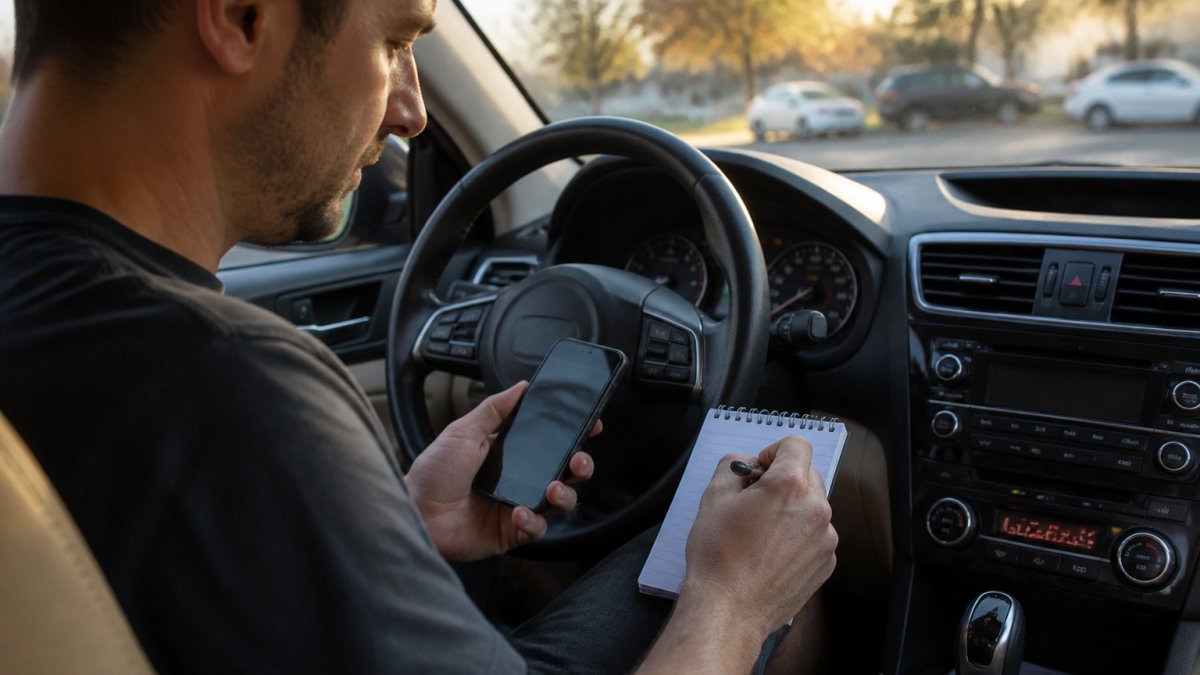
Use this checklist before your next visit:
- When does it happen? Cold start, braking, turning, or highway speed
- How often? Every drive, once a week, or only in rain
- What does it sound or feel like? Clicking, grinding, clunking, vibration
Hand that list to the service writer. It turns a guessing game into a roadmap.
When a Recurring Car Issue Is a Safety Risk
Some repeat problems are annoyances. Others are genuine safety concerns that shouldn't wait. The hard part is telling them apart, especially when a fault comes and goes.
Stop driving now. Pull over safely and arrange a tow if you experience any of the following:
- Brake pedal that sinks, feels spongy, or goes to the floor
- Brake noise or vibration that returns after a repair, especially grinding or a pulling pedal
- Steering that binds, wanders, or vibrates sharply at speed
Book prompt service, drive only if stable. These can usually be monitored for a short period but should be seen within days:
- A check engine light that returns after being cleared, with no drivability change
- A slow coolant or oil leak with no overheating
- A recurring tire-pressure warning with a slow leak
Monitor and schedule routine service. These are lower urgency but still worth tracking:
- A repeat noise that does not affect steering, braking, or temperature
- An intermittent warning light with no change in how the car drives
- A minor fluid seep that leaves a small spot but no measurable loss
A repeat fault in a safety system is not a maintenance item. It is a stop-driving signal.
The National Highway Traffic Safety Administration tracks safety recalls and defect investigations, and it's worth checking your vehicle identification number there if a problem keeps returning.
Early detection is cheaper than a breakdown, and it's far safer. Keep your documentation from the previous section, note which tier the problem falls into, and bring that record to the appointment. If a problem has come back after two repairs, treat the third visit as a diagnostic job, not another parts swap.
Frequently Asked Questions
Why do the same car problems keep coming back after a repair?
Most comebacks trace to one of three things: the shop fixed the symptom instead of the cause, a low-quality part failed early, or the diagnosis skipped a step. Recurring car issues often involve a fault that shares symptoms with another, like a misfire caused by a spark plug, a faulty injector, or a vacuum leak. A proper diagnostic testing process confirms the cause before parts are replaced, which is what stops the cycle.
Can a check engine light turn off and come back on?
Yes. When the check engine light keeps coming back after clearing, the computer has re-detected the same fault. Some faults are intermittent, so the light may stay off for days between events. Do not treat a light that resets itself as fixed. Have the stored codes read and the underlying condition tested, because a fault that returns repeatedly can affect fuel economy, emissions, and reliability over time.
How can I tell whether a recurring car problem is serious?
Treat any repeat issue involving brakes, steering, fuel smell, overheating, or a flashing check engine light as urgent. A flashing light usually signals a misfire that can damage the catalytic converter. Noises like clunking, banging, or rattling from the suspension or wheel bearings also deserve prompt inspection. For intermittent car problems, note when the issue happens, at what speed, and under what conditions so a technician can reproduce it.
What should I track when a car problem happens intermittently?
Keep a simple log: date, time, weather, speed, road type, and what you heard or felt. Note whether the issue appears on cold starts, during braking, or at highway speed. Record any warning signs, such as a flickering light or a new vibration. Bring the log to your appointment. This kind of evidence helps car diagnostic testing target the right system instead of guessing, and it gives the technician a way to verify the repair worked.
Recurring car issues are a diagnostic problem, not a parts problem. At Kerner's Auto, our ASE-certified technicians use advanced diagnostic tools in our nine-bay facility to trace faults to their source, and we back that work with loaner cars and complimentary shuttle service so you're never stranded. We've been family owned and operated since 1973, and we'd rather find the real cause than sell you the same repair twice. Get started with Kerner's Auto and put an end to the repeat visits.